

10 Muscle Gain Tips for 2026

.jpg)
.png)
Muscle Gain Tips: Discover 10 proven methods to build lean muscle in 2026. Get expert guidance from GetFit AI for steady, measurable progress.
Each January, many set New Year's Goals to boost size and strength, but progress falters when workouts become sporadic, and nutrition suffers. Consistent muscle gain depends on innovative programming, progressive overload, and focused nutritional strategies. Applying techniques such as structured workout plans, compound lifts, and appropriate training volume yields measurable improvements over time.
Refined strategies in protein timing, rest, and recovery help transform workout efforts into sustained gains. Evidence-based approaches allow individuals to optimize performance without relying on random efforts. GetFit AI’s AI fitness app integrates these principles into personalized plans that support workouts, nutrition, and consistent progress.
Summary
- Prioritize protein intake at a daily baseline rather than in a single large meal, aiming for 1.6 grams per kilogram of body weight per day, as this is the target shown to maximize muscle growth.
- Use a conservative daily calorie surplus of 200 to 500 calories and monitor weekly weight and strength trends, trimming about 100 calories if lifts stall while the scale rises quickly.
- Structure training around multi-joint compound lifts and heavy strength work, making the first two working sets your strength focus in the 3-6 rep range, and progress by microloading by about 1.25-2.5 kilograms.
- Protect recovery by prioritizing sleep: aim for 7 to 9 hours when possible, and at least 6 hours as a minimum, as sleep supports hormonal balance and protein synthesis.
- Make measurement and adherence central, as roughly 70% of gym-goers fail to track progress properly, and only about 20% of people who start a workout program stick with it beyond three months.
- Set realistic timelines for visible change, expecting about 1 to 2 pounds of muscle per month or 0.5% to 1% of bodyweight monthly for many trainees, and remember visible size gains can take up to six months, even as strength rises earlier.
- GetFit AI's AI fitness app addresses this by translating those principles into personalized workouts, calorie and protein targets, and adaptive progress tracking that adjusts based on weekly performance and recovery.
10 Muscle Gain Tips for 2026
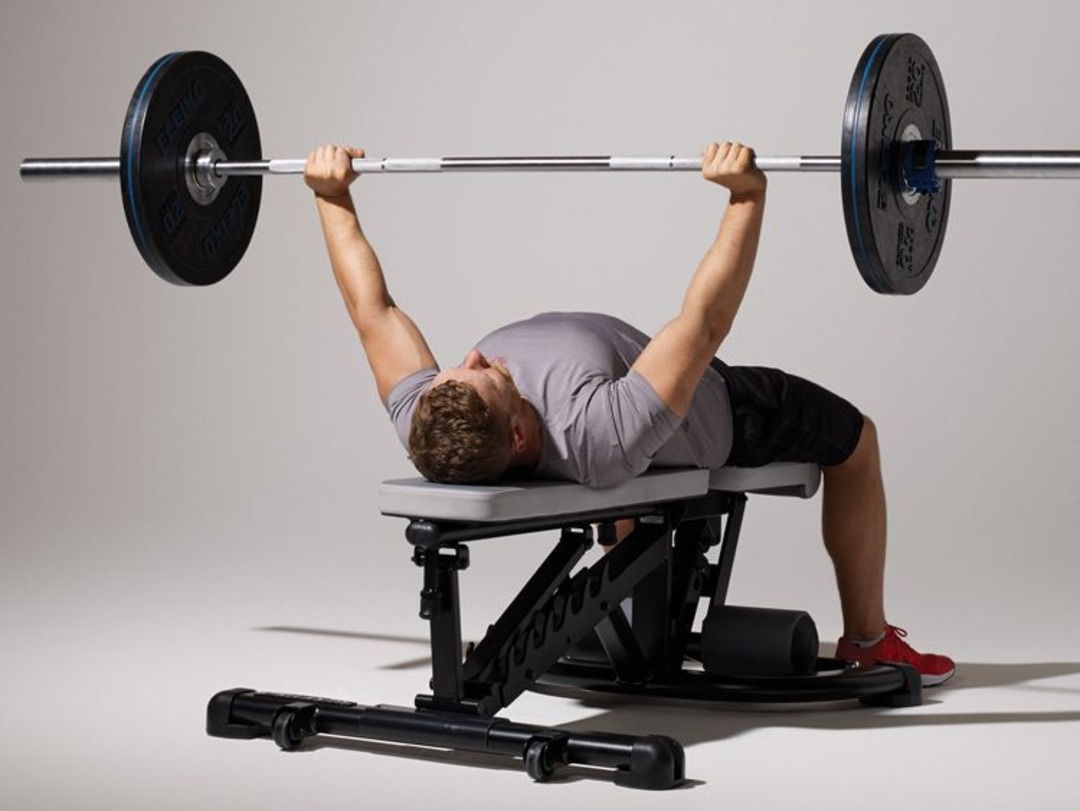
These ten tips form a practical playbook for building muscle. First, improve your nutrition to ensure the proper nutrients support recovery. Use compound lifts and progressive overload to create a strong stimulus. Lastly, protect that stimulus with focused recovery habits.
By following these strategies together, you can turn scattered efforts into measurable results rather than random gym sessions. To further enhance your muscle-building journey, consider how our AI fitness app smoothly integrates personalized plans to help you stay consistent and accountable.
1. What should you prioritize for protein intake?
Prioritize protein intake by aiming for a steady baseline each day, spread across meals rather than relying on a single large dinner. Consuming 1.6 grams of protein per kilogram of body weight per day can maximize muscle growth, providing a clear target for meal planning.
During a 12-week coaching program with budget-conscious beginners, a consistent pattern emerged: meat often posed as a barrier. Practical swaps, such as cottage cheese, eggs, beans, canned tuna, soy milk, and a modest protein powder, effectively closed the gap.
These alternatives helped maintain sensible calorie levels while improving adherence.
2. How can you increase your calorie intake?
Increase Your Calorie Intake. Lean muscle requires additional energy, but you must manage it carefully. Instead of boosting your calories significantly and hoping for good results, aim for a conservative daily surplus of 200 to 500 calories. Regularly check your weight and strength trends each week.
If you gain weight quickly but your lifts stop improving, think about reducing your intake by 100 calories. On the other hand, if both your strength and weight are going up steadily, keep eating the same amount. For those who have difficulty eating enough, adding liquid calories, such as smoothies made with oats, milk, nut butter, and protein, is a great way to increase energy without feeling full.
3. What should your focus be on in exercises?
Focus on Multi-Joint Exercises. Compound lifts are the most muscle-building-efficient you can do in the gym in a short time. Plan your sessions to include a main lower-body push, a main pull, and either a hinge or a squat variation on every training day. Then, include 2 to 4 accessory movements.
This helps keep your total weekly workout effective and reduces time wasted switching between machines and isolation exercises. Many lifters make slow progress and have mixed priorities because they use inefficient training methods.
4. How important is it to lift heavy weights?
To build muscle effectively, it's important to lift heavy weights. Heavy sets are needed to activate high-threshold motor units, which drive muscle growth. Focus on your first two sets of major lifts, aiming for 3 to 6 reps. Keep track of the weight you use and your Rate of Perceived Exertion (RPE).
A good way to progress is to slowly increase your weights, adding 1.25 to 2.5 kilograms when a set of five feels comfortably challenging. Also, view your warm-up sets as important information, not just warm-ups, so you can better see how your body reacts on different days.
5. What should you consume before workouts?
Consume Protein and Carbs Before Workouts. Pre-workout nutrition is about preparing your body, not about magic. A small meal with 20 grams of protein and 30 to 40 grams of carbs, eaten 45 to 60 minutes before training, helps maintain steady energy and improves focus.
If training in the morning makes solid meals unappealing, a shake with milk, a banana, and a scoop of protein is a good alternative. The goal is to avoid training in a catabolic state while making sure digestion is comfortable. Consider how an AI fitness app can help tailor your nutrition to optimize performance.
6. How should you manage your training intensity?
Avoid Training Hard Every Session. Training hard every session can slow down or stop your long-term progress. It's essential to define what 'hard' means for you. Most training sessions should focus on leaving one or two more reps in reserve for big sets.
Use weekly volume limits for major lifts and vary intensity throughout the week. Set aside one day for heavy lifting, another for moderate intensity, and a third for speed or technique practice. Also, plan deloads after 3 to 6 weeks of accumulated fatigue, especially if your performance metrics remain unchanged.
7. What carbohydrates should you prioritize post-workout?
Prioritize carbohydrates after workouts. Post-workout carbs help replenish glycogen and support recovery, primarily if you work out frequently. Combining a 30-50 g carb source with 20-30 g of protein after training accelerates muscle recovery and helps maintain sustained training intensity throughout the week.
Simple combinations work well: yogurt and fruit, a sandwich with lean meat, or rice with beans and a lean protein source. If you're looking for guidance on optimizing your nutrition for workouts, consider our AI fitness app to help tailor your diet to your needs.
8. How does progressive overload work?
Progressive overload is the main principle for strength training, but there are many factors to consider. Track weekly tonnage, weekly top sets, and technical consistency. If adding weight no longer works, try increasing reps, improving form, or reducing rest intervals for a while before going back to heavier weights. Think of progression like a dimmer switch, not just a regular switch; small, measurable steps add up to significant improvements in strength and size over months.
9. What does increasing time under tension mean?
Increasing time under tension means doing longer, controlled repetitions. This changes the workout without needing heavier weights. For accessory lifts, aim for a 2:1 or 3:1 ratio of eccentric to concentric repetitions.
Using slower tempos for 6 to 12 reps helps target muscle growth. Also, controlled repetitions show technical weaknesses, making tempo work a way to practice skills. This practice improves performance when you resume lifting heavier weights.
10. How much sleep should you aim for nightly?
Aim for at least 6 hours of sleep each night, though 7 to 9 hours is ideal. Sleep is nonnegotiable for maintaining hormone balance and supporting protein synthesis.
To improve your sleep, try practical tips: set a regular bedtime, keep your room cool, and avoid blue-light screens for an hour before bed. When you have to choose between training and work, remember that the quality of your sleep matters more than just working out more; proper recovery happens during sleep, not through extra workouts.
Why do most people copy others' routines?
Most people copy celebrity routines or random programs because they seem familiar and give a sense of progress. This approach might work at first, but without proper adjustments, the friction becomes clear: growth stops, recovery times don’t match your ability, and planning takes hours each week. Platforms like GetFit AI use proven training plans from top athletes to fit your current ability.
They offer in-app tips to adjust how much you do and how hard you push, turning a confusing program into daily, measurable steps. This process reduces planning and guesswork while preserving the elite structure.
What should you focus on in your training?
Consider your training as a contract between stress and repair. Consider what part of that contract you can actually control this week. This question shows you where to focus next.
What might be the surprising payoff?
The surprising payoff often shows up in ways that you might not notice right away.
Why is Gaining Muscle Important?
Gaining muscle matters because it changes what your body can do, not just how it looks. More muscle makes you stronger, helps you do daily tasks better, and improves your long-term health. This allows for easier work, play, and recovery. Additionally, using an AI fitness app can help you track your progress and optimize your workouts for better muscle gain.
How does muscle protect joints and prevent injuries?
Stronger muscle groups act like living shock absorbers around your knees, hips, and shoulders. They help spread out forces that would otherwise stress cartilage and ligaments. This leads to fewer flare-ups, faster recovery from minor sprains, and improved balance when moving quickly or awkwardly.
I've noticed a clear pattern among my clients: when stabilizer muscles get stronger and more toned, pain complaints decrease and movement quality improves, even if their lifting numbers don't increase much.
How does muscle affect metabolism and long-term risk?
Because muscle is the body’s largest metabolic sink, keeping muscle mass is essential for how the body uses calories over the years, not just days, according to the Journal of Applied Physiology 30. This decline underscores how a slight, steady loss of lean mass can lead to significant functional decline by midlife.
As muscle mass decreases, the cost of inactivity goes up. People may find it harder to recover from illnesses, face more challenges getting back to normal after times of less activity, and become more dependent on medication or assistive devices as they get older.
What does muscle do for the brain, mood, and motivation?
Muscle is endocrine tissue that releases signaling molecules during contraction. These molecules help support cognition, mood, and neural plasticity. This means that building muscle mass can lead to better mental strength. The emotional confusion around this topic is understandable; many people in training feel frustrated about being compared to those using hormone therapies.
This frustration is real and harmful. When expectations are unclear, motivation can drop. The honest choice is simple: one can go for quick gains by using drugs or focus on building durable strength and cognitive benefits that grow over time in daily life. Both paths need to be understood, but the muscle itself remains a universal currency for both physical and mental ability.
Why do one-size programs break down over time?
Most people follow one-size programs because they are familiar and feel productive. That works in the short term, but as fatigue, age, and life stressors build up, the same template breaks down. Sessions either don't challenge the muscle that needs growth, or they go too far and require long breaks. Platforms like GetFit AI map proven elite routines to an individual’s current capacity, adjust weekly volume and recovery windows, and offer in-app chat guidance so users keep stimulation consistent without guessing. This helps maintain momentum as life gets more complicated.
How does muscle change your daily life in small, visible ways?
Practical gains show up in daily tasks and energy levels. A typical four-month pattern shows that adding regular brisk walking and light loading helps reduce weight, boost stamina, and make daily chores easier. This also allows people to stay on track with their training.
Muscle changes turn tasks that used to tire you into regular activities. As a result, many people report having more free time and finding it easier to plan after just a few months of consistent improvement.
Why does muscle translate into real-world confidence?
Muscle changes posture, fatigue thresholds, and the way a person carries themselves. This change helps build social confidence and reduces avoidance. Think of a muscle like a car's suspension.
When it’s upgraded from soft springs to tuned coils, the ride gets smoother. Trust in the vehicle improves when going around corners, and people can push harder without fear. This psychological feedback loop is why physical progress often leads to larger life changes than the numbers on a scale indicate.
What does recent research say about strength versus size?
Clinical work is beginning to clarify the causal link between growth and performance, moving beyond a simple correlation. A focused 15-week experiment reported in Men's Health confirms that muscle growth is the most crucial factor for gaining strength.
This finding aligns with the coaching pattern GetFit AI follows: prioritizing reliable, measurable growth phases that fit your schedule and recovery, rather than chasing every training fad.
What is the unresolved question about muscle gain?
That simple advantage may sound solved, but it leaves one big question unresolved: What truly drives muscle gain beyond basic understanding?
Related Reading
How Long Does It Take to Gain Muscle?

Muscle gain is a slow, compound effect, not a sudden event. While people often feel stronger within weeks, visible changes in muscle size can take several months of regular exercise, good nutrition, and recovery. It's important to see early strength gains as a sign of potential growth. You should measure your progress using both numbers and photos, or tape measurements, taken at regular intervals.
Why does strength rise before size?
The nervous system adapts quickly. Early progress comes from improved motor unit recruitment, cleaner technique, and better coordination; it's like the body learning to use what it already has more efficiently. This phenomenon explains why, according to the Cleveland Clinic, "It can take from three to four weeks to notice an increase in strength," and why people may start to feel that their efforts are getting noticeably easier, even though their muscles haven't added much new tissue yet. Consider it as rewiring a tool chest, allowing tools to be used more intelligently before investing in additional ones.
How should you judge real muscle growth?
Visible, measurable size usually takes longer to show than strength, and patience is essential because structural changes occur slowly and build over time. The best signs of real muscle growth are steady increases in the size of your arms or legs, consistent improvement in the number of sets and repetitions you can do, and either the same or better recovery time, not just one pumped-up photo.
Keep this in mind, since the Cleveland Clinic, "It can take up to six months or more for visible changes in muscle mass," mentions that while three-month snapshots can help guide you, looking at six months or longer gives you the real picture.
What breaks momentum, and what fixes it?
This pattern often appears among younger trainees: they start strong, but motivation dips as programs become inadequate due to life stressors or undiscovered small wins.
The hidden cost of this familiar cycle is wasted time and eroded confidence.
Addressing this issue requires building short, measurable training cycles that reward consistency over perfection.
It is essential to anchor motivation to repeatable metrics, such as one-rep max progression or a weekly volume target, rather than relying on mirror selfies.
Why do generic plans fail over time?
Most people follow generic plans because they are familiar and straightforward, which works at first. However, as weeks go by, one-size-fits-all programs create problems. Missed adjustments can lead to plateaus, training loads become disconnected from recovery, and motivation drops.
Platforms like the AI fitness app offer a different path. They customize elite athlete routines to match your current ability, automatically adjust weekly volume, and provide in-app chat guidance. This method helps maintain the right level of challenge and keeps progress on track without guesswork.
How to troubleshoot a stubborn plateau?
If strength increases but size and measurements stop changing after a few months, treat it as a control issue. Increase the number of adequate-quality reps by 10 to 20 percent over a 4 to 6-week mini-cycle, or adjust rep ranges to add mechanical tension without significant changes in calories.
Use microloading, planned deloads based on performance signals, and autoregulation rules to make sure fatigue never disguises itself as failure. These changes keep the drive strong, which is critical; a lack of motivation is often the real barrier for young people seeking quick results before major life events.
Are you ready to train like the legends?
Are you ready to train like the legends and finally achieve the body you've always wanted? GetFit AI's AI fitness trainer app lets you follow the exact workout routines that changed Arnold Schwarzenegger, Kobe Bryant, Cristiano Ronaldo, Serena Williams, and over 11 other top athletes into champions.
You can also chat with them anytime you need guidance or motivation. Download the #1 rated AI fitness app for free today to get fit for less than the cost of a single month's gym membership, because greatness isn't born; it's built one workout at a time.
What question do most people avoid?
That steady, patient work raises a single question that most people avoid but cannot escape.
Related Reading
How Much Muscle Can the Average Person Gain in a Month?
Most people can expect modest, measurable muscle gains each month, rather than dramatic overnight changes. For many natural trainees, a sensible goal is 1-2 pounds of muscle per month. This matches the faster progress of newcomers and the slower pace of experienced lifters. Some coaches prefer to use a metric of 0.5%-1% of body weight per month to adjust expectations based on body size.
How much does your starting point change that monthly number? When coaching beginners through structured 12-week blocks, newcomers often reach the higher end of monthly gains. Their bodies respond quickly to steady workouts and proper nutrition. In contrast, trainees with three or more years of consistent lifting typically see their gains plateau at around 1 pound per month unless they adjust their approach.
Factors such as age, starting leanness, and metabolic rate are critical. Someone who is lean and has a fast metabolism will need to plan their calorie intake more carefully and be patient. Meanwhile, an older trainee might need more recovery time to get the same monthly results. To support your fitness goals effectively, consider how an AI fitness app like GetFit AI can tailor your training and nutrition plans.
How should you read small changes without getting misled?
Daily weight changes, how much water you drink, and what you eat can make short-term weight readings misleading. It's essential to treat each weight check as noise. To get better insights, use some simple tips: weigh yourself every morning while fasting and wearing the same clothes, average those weights over a week, and measure one limb or your trunk size every two weeks.
These combined checks, along with regular photos, show the proper direction of your progress over 6 to 8 weeks. Trusting a single data point doesn't usually indicate a change in muscle.
What breaks steady monthly progress, and how do you detect it fast?
A common issue is losing consistency instead of technique. In one coaching group, clients who missed more than three workouts each month or did not log their daily calories saw their expected monthly lean-mass gains drop by about half in the next cycle.
Factors such as stress, sudden schedule changes, and poor cardio management often put calories and recovery in the wrong place. It's essential to address adherence and recovery before changing the program.
How long do monthly gains need to compound before they matter?
Treat a single month as an indicator, not an outcome. If your weekly averages move in the right direction for two months in a row, you are likely on the right track.
Suppose they do not; change one thing and monitor the results over the next 4 to 8 weeks. Think of it like stacking plywood: one sheet doesn't change stiffness much, but if you layer them consistently over months, you create a structure that works well.
What common mistakes erase months of work?
That steady logic seems complete, but a few minor mistakes can quietly erase months of work.
What tools can help with program adjustments?
Most teams handle program adjustments manually because it is familiar and provides greater control. While this method can work at first, as circumstances change, it becomes less effective. The rules for volume, intensity, and recovery may not align with each person's capacity, slowing progress as changes are sought.
Platforms like GetFit AI map elite athlete routines to individual capacity, automatically adjust weekly volume, and offer in-app chat guidance. This support helps users make micro-decisions quickly, ensuring workout challenges remain consistent without endless guesswork.
What are the Common Mistakes to Avoid When Trying to Gain Muscle

The biggest mistakes in gaining muscle are often not about techniques, but rather about information and behavior. You may not receive clear signals on what to change, or you could undermine consistency before a program shows results.
By improving how you track and manage your training, you can address many other problems rather than leaving them unresolved.
How are you actually tracking progress?
Many trainees keep notes that aren't helpful, like weekly bathroom selfies or random top-set numbers, and then they wonder why nothing changes. According to Men's Health, "70% of gym-goers make the mistake of not tracking their progress. This behavior is common; it's standard. This often results in inconsistent volume measurements, no RPE records, and no brief notes on soreness or sleep.
As a result, minor but fixable trends can go unnoticed. Track three things each session, every time: working sets and reps, RPE for the heaviest set, and a straightforward recovery note. By doing this, you will stop mixing up noise with failure.
Are you letting fatigue dictate the program?
This is a constraint-based failure mode. When stress or sleep quality worsens, most people either push themselves too hard or quit their sessions. Both of these choices can halt progress.
After coaching a group of nine-to-five workers for 10 weeks, the weekly top-set tonnage dropped 12 percent by week three, despite ignoring signs of fatigue.
On the other hand, simple autoregulation, dropping one set or reducing load by 5 to 10 percent, helped keep the momentum going throughout the cycle. Think of training like delivering lumber to a building site: you need to bring the right amount at the correct times, not try to provide everything you can carry on the first day.
Why do innovative programs stop working for real people?
Programs fail when the complexity exceeds a person's capacity. The standard approach is to choose a high-capacity template because it seems impressive, then attempt to fit it into a life that changes every week.
As things get more complicated, selecting exercises, managing volume, and recovery times become challenging. This leads to missed sessions and low-effort workouts. That gap between the plan and real life is where consistency breaks down. To avoid this pitfall, using an AI fitness app like GetFit AI can provide tailored solutions that adapt to your unique lifestyle.
What do you measure that actually predicts growth?
Volume is king, but not just as a simple number. The essential metrics include weekly adequate reps for the target muscle, training frequency, and RPE trends at specific weights.
A simple rule over 12 weeks is: if weekly adequate reps for a muscle drop for two weeks in a row, treat it as a technical signal to lower intensity or take a rest day.
This method prevents unnecessary changes across the entire program and helps maintain steady progress without chasing flashy single-session personal records.
Are you treating nutrition and adherence like separate problems?
They actually share the same issue. When trainees miss meals or stop tracking their food intake, the program loses its reference point, and motivation begins to fade. Only 20% of people who start a workout program stick with it for more than three months.
The real challenge is maintaining a routine over the medium term, not just the initial push. Design your intake and meal prep to work during a busy week, not just an ideal one. Also, focus on establishing one habit—such as eating daily protein or having a prepped smoothie—that will provide a strong foundation for the rest of your plan.
Are you confusing work with progress in the gym?
Intensity without intent leads to tiredness, not growth. Lifting heavy every session is a common mistake; it may seem productive, but it causes long-term fatigue and increases the risk of injury.
Instead of random volume, focus on measurable quality: choose one lift to target each session, define the top sets you will track, and ensure every extra exercise serves a purpose.
This careful approach allows for recovery and steady progress.
How does status quo disruption affect your training?
Status quo disruption is about how most people usually manage their training programs. They often piece together routines from articles, workouts from celebrities, and some coaching texts, as this way feels reliable and gives them a sense of control. But this method can struggle when life variability and measurement errors mess with the plan. These problems can lead to missed adjustments, stalled lifts, and a drop in motivation.
Platforms like GetFit AI connect proven athlete routines to each person's capabilities, automatically adjust weekly volume and intensity based on tracked metrics, and offer in-app chat support. This helps users swap guesswork for minor, timely corrections that keep their progress going.
Are you ignoring the small technical leaks that wreck long-term gains?
Are you overlooking small technical leaks that could hinder your long-term progress? Problems such as improper form under heavier loads, inconsistent warm-ups, and frequent changes in accessory exercises can add up to significant issues, including plateaus and injuries. Think of these problems like plumbing: while a small leak is easy to fix, a flooded gym can be costly.
Make sure to use three standard preparatory movements before every heavy lift, stick with the same accessory exercises for at least four weeks, and record how your joints feel after each session. These small actions can help prevent slow declines before they become significant problems.
What is the key observation about training problems?
A crucial observation is that most training problems are actually social and organizational issues presented as technical challenges. The solution often lies in improving the process rather than simply increasing intensity. Keep the process simple, measure the right metrics, and use real-time data to help decide when to be bold and when to take it easy.
What will the next section reveal?
The following section will share insights that change how people think about elite training for everyday life.
Make Your Favorite Athlete Your Fitness Trainer | Try GetFit AI's AI Trainer App for Free Today
For New Year's muscle-gain goals to last beyond the first two months, it is essential to pick a plan that includes top-notch training in a routine you can handle. Consider GetFit AI to turn hypertrophy and resistance-training principles into a daily program tailored to your schedule, nutrition, and recovery. Many people mix and match workouts from different articles, which can seem easy. However, over time, this broken approach can reduce training frequency, disrupt volume control, and hinder steady strength gains.
On the other hand, platforms like GetFit AI offer professional-grade routines tailored to your current ability. They automatically change weekly volume and rest while giving in-app chat coaching. This way, you swap out guesswork for measurable muscle growth without spending more than what one month at a gym would cost.
Related Reading
- How To Build Muscle
.png)