

What Is the Average Incline Dumbbell Press Standards?

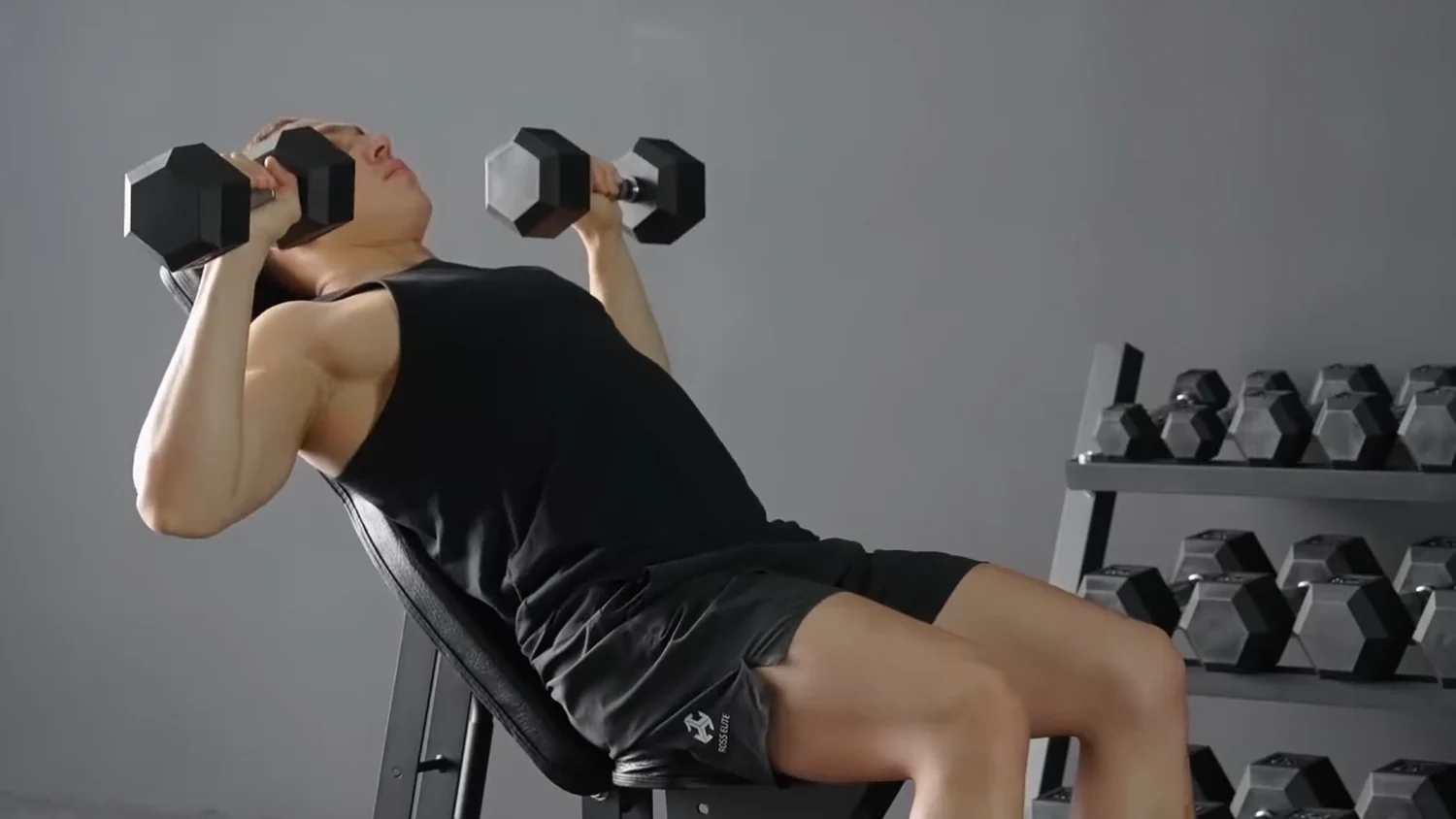
.png)
Average Incline Dumbbell Press standards for all fitness levels: learn weight benchmarks, techniques, and progression plans with guidance from GetFit AI.
Tracking progress and evaluating workout performance can be challenging when factors such as pace, form, and load vary. Many lifters analyze their incline dumbbell press numbers to determine if adjustments in weight, bench angle, or rep range might lead to improvements. Average performance data from beginners to advanced athletes offers a clear reference point. Tools like Best Fitness Apps enable comparisons that help fine-tune training regimens.
Benchmarking strength and testing safe one rep maximums can refine techniques like tempo control, stability enhancement, and unilateral work. Tracking these parameters provides practical insights into progressive overload and consistent gains. GetFit AI integrates personalized benchmarks and delivers an AI fitness app that aligns performance standards with individual progress.
Summary
- Small changes in bench angle materially alter muscle recruitment, with a 30-degree incline shown to increase upper chest activation by about 20 percent, meaning nudging the bench 5 to 10 degrees can shift work between clavicular fibers and the anterior deltoid.
- Community benchmarks vary widely; for example, the average male incline dumbbell bench press is roughly 70 lb, while a commonly cited "good" benchmark is 100 lb, so that a single average can obscure training age and bodyweight differences.
- When gyms force large dumbbell jumps, manipulating tempo, pause reps, negatives, or cluster sets is a practical fix, and you should validate progress by testing 3 to 5 rep sets every 4 to 8 weeks rather than chasing heavier plates.
- Address unilateral imbalances proactively, because if one arm is roughly 10 percent weaker, you should prioritize unilateral work and scapular control for about 4 to 8 weeks before re‑testing to restore symmetry.
- Expect quick neuromuscular gains early, for example, noticeable improvements in 8 to 12 weeks for beginners, but use consistency checks, such as repeating a clean top set of three across three sessions within 10 days before increasing load.
- Program pragmatically by running two dedicated incline sessions per week, keeping a quality day at about 60 to 70 percent of your working max, and a transfer day with heavier 3 to 5 rep sets to balance motor control and strength.
- This is where GetFit AI fits in. The AI fitness app addresses this by comparing your incline dumbbell press numbers to realistic standards, estimating your one rep max, and providing adjustable progression templates for micro-loading, tempo, and unilateral work.
Overview of the Incline Dumbbell Bench Press
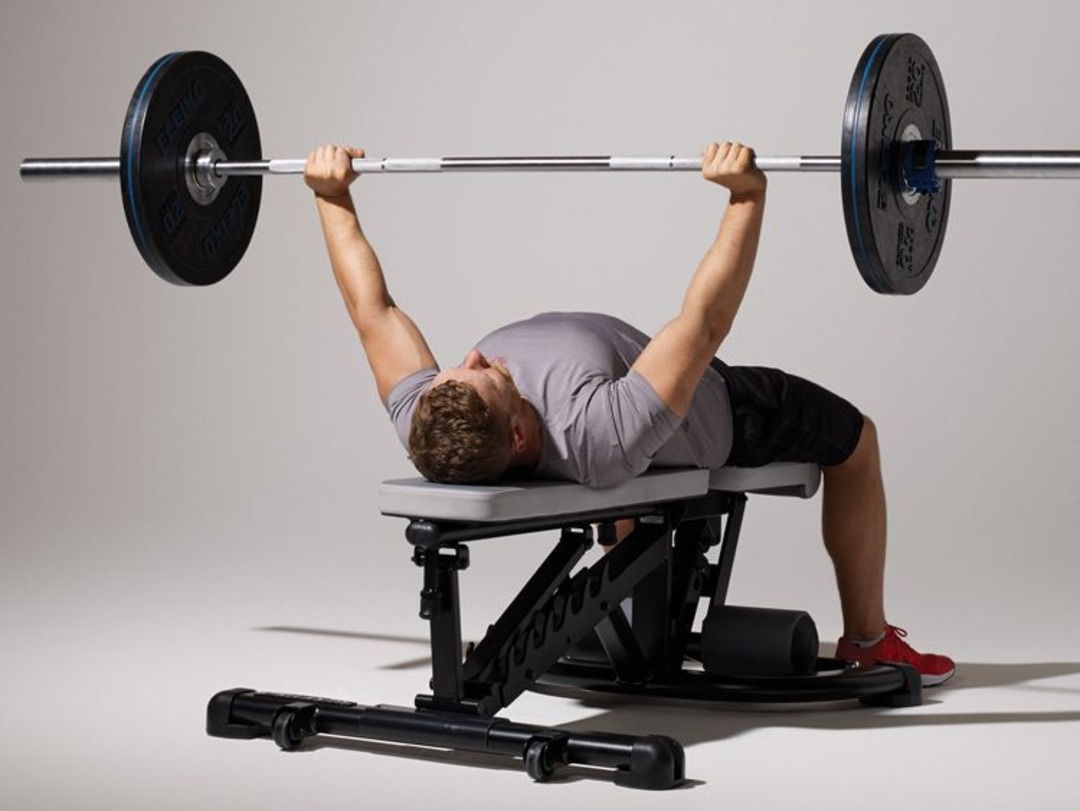
The incline dumbbell bench press is the go-to upper-chest tool for athletes who need both size and pressing power. This exercise works the clavicular fibers and requires more shoulder stability than a barbell.
In practice, this means athletes can change the angle, speed, and load on one side to switch between hypertrophy, strength, and sport-specific force development without changing how they do the exercise. Additionally, using an AI fitness app can help track your progress and optimize your workout routine.
Elite athletes carefully change the bench angle to meet different movement needs. A lower incline keeps the load closer to the pressing line used in throwing and grappling. On the other hand, a steeper angle focuses more on the anterior deltoid.
Research from Men’s Health, using an incline angle of 30 degrees, shows that muscle activation in the upper chest can increase by 20% compared to a flat bench. It shows that even a slight change of 5 to 10 degrees can significantly change which muscles are used. Therefore, small changes in technique can lead to a big impact in sports.
What to do when progress stalls?
When progress stalls because a gym has limited options, like only having large dumbbell jumps, lifters often find themselves in a tough spot. This situation is common. The usual response isn't to just try to lift a heavier dumbbell. Instead, many lifters feel frustrated, look for safer equipment like the Smith machine, and then struggle with joint pain, which makes them give up on their steady progress.
A better way to handle this is to adjust volume and intensity variables. For example, using tempo reps, pause reps, 1.5-second negatives, cluster sets, and extra close-rest top sets can help. These methods increase time under tension and improve motor control without needing new plates, allowing the shoulder to stay stable while the chest does the work.
Which loading strategies transfer to sport?
What loading and set strategies actually transfer to sport? If your main goal is power transfer, pair low-rep, heavy sets with contrast or speed work in the next set. For structural size, use moderate weights with controlled lowering and short pauses at the bottom to reinforce the sticking point. It is suggested to change up variables over a 4 to 6 week block: build control and eccentric strength first, then add heavier, lower-rep sets and ballistic intent.
For context, a helpful benchmark is Strength Level; the average Incline Dumbbell Bench Press weight for a male lifter is 70 lb. This helps you pick sensible starting loads and realistic progression targets, rather than guessing.
Why do technique details matter?
Technique details matter more than you might think. When coaching athletes who have limited gym equipment over an 8-week microcycle, a common problem was rushed reps. Rushing often hides imbalances and lets the anterior deltoid take control of the movement. By making small adjustments to posture, like scapular retraction and a slow descent, each repetition becomes a quality motor pattern that the nervous system can remember.
Just like tuning a stringed instrument requires a few changes to improve the tone, the lift is only as good as the quality of the movement involved.
How can apps support your training?
Most lifters agree that adding weight shows progress. This common method works well at first, but making big jumps in dumbbell weight can hurt your technique and cause setbacks. Platforms like GetFit AI give athletes ready-made templates modeled after successful athletes and on-demand trainer chat. This allows lifters to change to different strategies like tempo, cluster, or micro-loading when they can't use physical plates. This way, they can keep making progress while also reducing stress on their joints.
It can be frustrating when a small issue with equipment makes you feel stuck. The answer often lies in making a smarter choice about the variables instead of just adding more weight.
What does average really mean?
The benchmark question of what “average” really means starts a bigger discussion that often turns out to be surprisingly controversial.
Related Reading
- How Many Pull Ups Should I Be Able To Do
- Average Bench Press By Age
- Average Grip Strength Male
- Average Bench Press
- How Much Does A Bench Press Bar Weigh
- Average Male Bench Press
- How Much Can The Average Man Bench Press
- Grip Strength Chart
What is the Average Incline Dumbbell Press Standards For Men?

Average incline dumbbell press standards for men are mostly in the middle, with clear differences that separate casual lifters from serious strength trainers. A “good” benchmark is notably higher than the group average, as shown by Strength Level, for a male lifter, a good Incline Dumbbell Bench Press is 100 lb.
This gap is important because it tells you if you should focus on small technical improvements or aim for bigger weight goals. Additionally, using an AI fitness app like GetFit AI can help tailor your training to meet these standards effectively.
How should one understand an average number? A single average hides differences, training experience, and body weight. Many men might reach the community average while still not having good control with one arm or consistent movements. So, the average can make it seem like less training is needed.
Think of the average as a middle step on a staircase that isn't even; some steps are small and safe, while others are big jumps that need a steady lead leg.
What metrics give a better understanding? Relative strength and consistency are more important than just the raw weight. Instead of focusing only on total numbers, watch the ratio of weight lifted to body weight, how consistently top sets are repeated over three test days, and the speed or effort felt at set percentages.
For comparison, note that the average Incline Dumbbell Bench Press weight for female lifters is 30 lb, according to Strength Level, 2023. This shows why using relative measures and fair benchmarks is important for setting realistic and meaningful goals.
What common patterns derail progress, and how do you fix them?
What common patterns derail progress, and how do you fix them? A common problem is poor feedback loops. Lifters often pick a weight and then stop making progress for weeks. When this happens, they try to make big jumps in weight that can hurt their technique.
The real issue is often uneven weight distribution and not enough progressive testing, not that they aren’t trying hard enough. The best way to fix this is to think of increments like calibration. Test 3 to 5 rep sets every 4 to 8 weeks, and adjust target weights by a percentage instead of guessing. Think of it like slowly tuning a radio dial until you get a clear signal; small changes work better than big ones.
Most teams stick with simple weekly weight increases because it's easy and doesn’t need extra tools. While this works at first, it can lead to problems as training variables and personal limits rise. This can cause missed context, inconsistent ramping guidelines, and regular stalls becoming normal. Solutions like GetFit AI help by centralizing athlete-modeled progression templates with in-app trainer adjustments. This allows athletes to switch testing methods or micro-progression plans quickly while keeping a clear history of what improved and why.
How long should you expect progress to take?
How long should you expect progress to take? Set blocks matter. Beginners often improve noticeably in 8 to 12 weeks when they follow structured ramping and consistency rules.
In contrast, trained lifters need more time, using careful cycles that focus on how their body adapts and recovers. The failure point usually happens when there is too much load without proper recovery or not enough focus. If you treat progress like a race, you will hit the same wall. However, when you see progress as a series of climbs with specific checkpoints, gains can build up.
Beginners’ emotional reality is important and can teach us a lot. Choosing the right starting weight and dealing with the awkwardness of balancing two dumbbells can feel humbling and sometimes embarrassing. This emotional struggle helps explain why many stop improving. The right programming and steady, visible feedback are what keep effort from turning into discouragement.
What question does this contrast raise?
The difference between numbers and personal experiences raises a question that most coaches avoid but must face as they move forward.
What is the Average Incline Dumbbell Press Standards For Women?

The practical average for women on the incline dumbbell press depends on how it is reported. Community norms suggest that typical beginners lift in the low doubles per dumbbell, while intermediates lift more as their technique and stability improve.
According to Strength Level, 2023, "A beginner female lifter can expect to lift 20 lb on the incline dumbbell press." This amount is a common starting point to tell true novices apart from those who are untrained. Also, Strength Level, 2023, "An intermediate female lifter can expect to lift 60 lb on the incline dumbbell press," shows a benchmark that is typically seen after consistent training and better single-arm control.
Why do numbers differ between sources and communities? The same movement, when looked at in different ways, gives different averages. Some charts show per-dumbbell working loads, while others show a single-arm 1RM or add numbers together into one total.
Factors like arm lengths, bench angle, and whether an athlete tests a true 1RM or uses a rep-to-1RM estimate cause differences in published averages. So, the main number often does not show actual gym performance.
How should someone set a personal benchmark to help progress? The important thing is to choose a consistent testing method and stick to it. Testing a 3 to 5 rep maximum on two different days is a good idea.
Athletes should record their best set to check their form and note whether the number is per hand or total. Treat the first test as a calibration and the second as a verification. This method reduces variation, which can be affected by fatigue, adrenaline, or technical problems.
What measurement errors quietly sabotage comparisons?
Big dumbbell jumps and inconsistent grip width are common problems. A 5-pound difference in weight for each hand means there is a 10-pound gap in the total weight. While this might seem like progress on paper, it can actually hide unilateral weakness.
Think of tracking like weighing fruit on a spring scale; if you move the fruit a little, the needle jumps. This makes the reading hard to understand unless your platform, position, and method are thoroughly controlled.
When should you favor unilateral work over heavier bilateral loading?
If your single-arm difference is greater than about 10 percent in two controlled tests, focus on unilateral strength and scapular control for 4 to 8 weeks, and then retest.
Fixing asymmetry is not just a slow luxury; it speeds up performance.
Once balance gets better, bilateral numbers usually improve because both nervous system efficiency and intermuscular coordination get better.
What realistic month-to-month gains should you expect?
Early gains often come from better technique and muscle coordination. After the beginner phase, progress usually slows down but becomes more consistent.
It's useful to use small, repeatable steps and keep track of load and speed whenever you can. Measuring progress should look at consistency across three tests instead of depending on one personal record that might be unusual.
What fitness app can help you achieve your goals?
Are you ready to train like the legends and finally get the body you've always wanted? GetFit AI's AI fitness trainer app lets you follow the exact workout routines that changed Arnold Schwarzenegger, Kobe Bryant, Cristiano Ronaldo, Serena Williams, and more than 11 other top athletes into champions. You can also chat with them anytime you need help or motivation.
Is a 75 lb Incline Dumbbell Press Good?
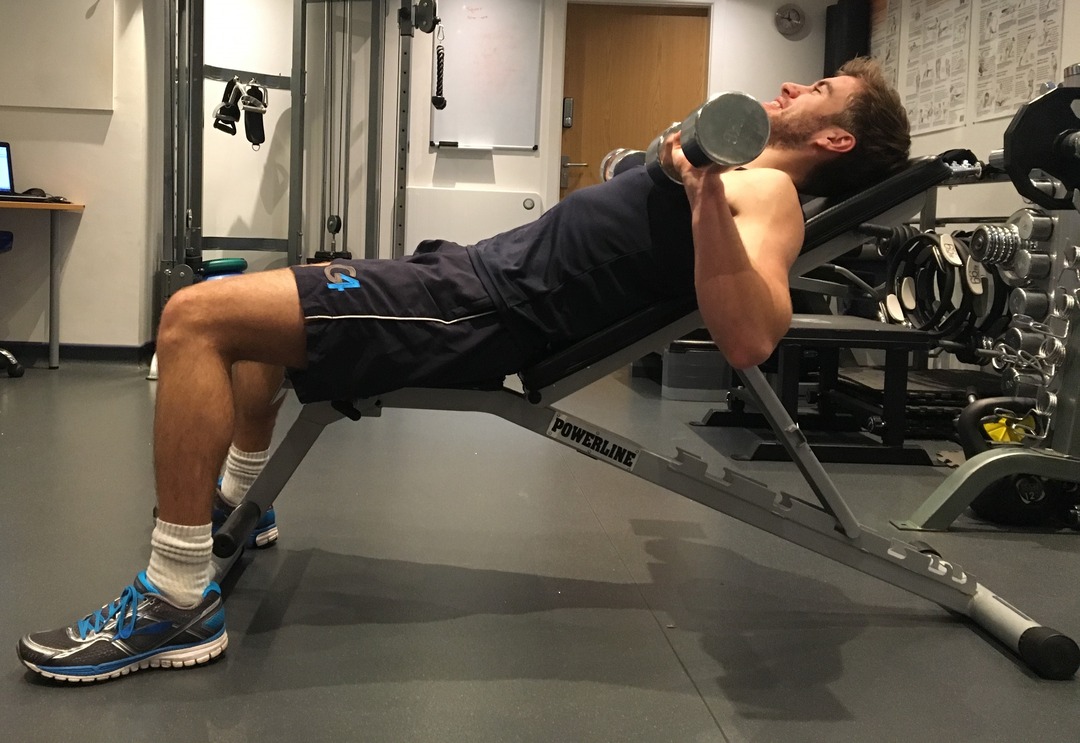
A 75-lb incline dumbbell press is a big achievement, especially for men who are at an intermediate strength level whether this weight is seen as 'good' depends on various factors like bodyweight, training experience, and fitness goals.
This lift shows good control in the upper chest and shoulders; however, it might be a starting point for different training goals depending on whether someone wants strength, size, or athletic performance.
How does a 75 lb incline dumbbell press stack up against published standards? According to Fitness Volt, "A male intermediate lifter can incline dumbbell press 75 lb (1RM)." This figure matches the intermediate level for men's one-rep max (1RM) lifts in 2023, making it a reliable benchmark.
What should this tell you about your training priorities?
What should this tell you about your training priorities? When coaching 8- to 12-week training blocks, a pattern emerges: lifters can raise their 1RM without seeing visible changes in the mirror if volume, calories, or exercise selection are not aligned with hypertrophy. This frustration is both real and common. It often leads individuals to believe that the number itself is worthless, when in fact, the problem lies within the surrounding program. If your goal is size, a single 1RM reflects maximal capacity, rather than the weekly mechanical tension your chest is experiencing.
What usually breaks when progress stalls?
When progress stalls, what usually breaks? This is a constraint-based observation: steady, linear loading works until recovery, nutrition, or programming complexity shifts.
When athletes slide into a mild calorie deficit, lose sleep, or pile on extra stress, strength can stay the same or even rise briefly while hypertrophy stalls. Strength may drop because of CNS fatigue that builds up. The failure mode I see most often is poor feedback, not poor effort.
The solution is to track three things for two to four weeks, then take action: session RPE, top-set velocity or tempo, and weekly volume for the chest. If two of the three trends are down, adjust the variables before trying to lift heavier dumbbells.
When should you push the weight?
Most athletes tend to add weight because it seems like an explicit action. This way of doing things can help at the start of training, but it usually causes problems later on. Over time, it can lead to bad form, uneven movement patterns, and avoidable plateaus.
Solutions like GetFit AI offer an alternative. They let athletes use athlete-modeled progression templates and chat with trainers in the app. This feature helps users switch to micro-progression strategies or change the volume they are using, which keeps their technique strong while still allowing them to make progress.
How to choose your next training focus?
When should you push the weight, and when should you change the program? Treat the 75 lb as a test. If you can do a clean top set of three at the same weight for three sessions in 10 days, increase the weight or lower the reps to build maximal strength.
If your speed slows down or your form falls apart on the second rep, focus on density, tempo control, and accessory work for 4 to 6 weeks. Think of the 75 lb as a driver’s license: it shows you can control the weight under test conditions, but it doesn't mean you are ready to race. Use it to decide whether to train for speed, load, or volume next.
Why Does Programming Become Decisive?
It is tiring when consistent effort gives you results, but not the look or change you want.
That pressure is where programming becomes very important.
This simple marker seems like a solution, but the choice made next will completely change everything about how that 75 lb represents progress.
Related Reading
- Bench Press Standards
- Do Pull Ups Work the Chest
- Symmetric Strength
- Grip Strength Norms
- Average Deadlift Weight
- 1 Rep Max Chart
- Average Male Deadlift
- Good Bench Press Weight
- Weightlifting Standards
Pro Tips for Improving Incline Dumbbell Press

Small, careful changes to the angle, tension, and prehab can unlock much more upper-chest stimulation than just adding weight. These adjustments help keep your shoulders safe while transferring force to your sport.
Research from the SQUATWOLF Blog, "Incline dumbbell press can increase upper chest activation by 30% compared to flat bench press shows that getting your technique right is not just for looks; it really changes how the muscle works.
You can fine-tune the angle without guessing by using a three-position test at 30, 35, and 40 degrees. Use two objective checks: figure out which angle gives a better stretch in the pecs at the bottom without pinching the shoulder, and which lets the elbow stay right under the wrist when you lift. Record a side view and a head-on view of a single set.
If the clavicular fibers are working well and the bar path is close to the midline, keep that angle for the subsequent four sessions. If the anterior deltoid takes over or your shoulders get tired too soon, lower the incline by 5 degrees and test again.
To keep the shoulder from taking over, try these simple warmups: start with three sets of 12 external rotations with light resistance, do 30 to 60 band pull-aparts, and add a 90/90 scapular squeeze for 10 reps. These exercises work the rotator cuff and scapular stabilizers, reducing the common problem of the shoulder firing first.
For athletes with lower back issues, change foot placement and lower the arching demands by pressing with feet slightly boosted on a low platform or using a machine that supports the upper back; this helps keep shoulder and chest mechanics in check.
How do you expose and fix side‑to‑side weaknesses?
Treat unilateral testing like a diagnostic tool. After a general warm-up, test a single-arm, six-rep set on each side with the same tempo. If one arm fails two reps earlier, plan an extra unilateral set for the weaker side. Use slightly slower eccentrics during these sets for three sessions, then retest.
This method is similar to balancing two pistons in an engine; small differences can cause big losses in force and control. By fixing even a small gap, you can restore balanced power much faster than just adding more weight.
When should you use bands, reverse grips, or pre‑fatigue?
Use bands for top-end tension work, not as a gimmick. A banded top set teaches lifters to hold aggressive lockout pressure without shifting into a shoulder shrug. Reverse grip incline dumbbell presses change the direction of pull, which can help the upper chest for lifters who often feel their shoulders take over. Use them for 2 to 4 sets of 6 to 8 as a helpful tool.
For targeted muscle growth, a short pre-fatigue on cables or a pec deck helps create a better stretch reflex at the bottom of the incline press. This technique increases chest strain while keeping the total weight manageable. When considering the benefits of an AI fitness app, it's important to explore solutions that support your training journey.
Which objective cues show the set is doing its job?
Observe where the burn shows up. If the last two reps create a wide, chest-centered burn and your elbows stay a bit tucked, you are successfully targeting the clavicular head. However, if you feel a sharp pain in the front of your shoulder or lose your thoracic posture, stop and change your angle or your accessory work.
Another helpful hint is that when you pause for one second at the bottom, the upward part should feel a little tougher, not easier. If it feels easier, then momentum is helping you, which means you are not training tension control.
How can you program these tips into real sessions without overcomplicating things?
Run two dedicated incline sessions each week. One session should focus on motor quality, and the other should focus on load transfer. On the quality day, keep weights at 60 to 70 percent of your maximum working weight. Use controlled eccentrics or reverse-grip variations for 3 to 5 sets of 6 to 10 repetitions.
On the transfer day, use heavier exercises with both arms or legs for 3 to 5 reps and take longer breaks. You can also use banded overloads for training lockouts at the top. Record one clear measurement, like your Rate of Perceived Exertion (RPE) on the second-to-last set or your velocity if you can track it. Only increase the weight when that measurement gets better over two sessions.
What common mistakes do lifters make?
Many lifters stop because the exercise feels right, rather than relying on exact measurements.
This is why adding simple tests, prehab, and brilliant unilateral work can make a big difference for athletes.
Make Your Favorite Athlete Your Fitness Trainer | Try GetFit AI's AI Trainer App for Free Today

To stop guessing and make your average incline dumbbell press a consistent part of your training, think about using GetFit AI. Many lifters often accept noisy feedback and large dumbbell changes because it feels normal. However, this choice can cause weeks of lost progress.
Tools like GetFit AI bring together routines designed for athletes, per-dumbbell progression templates, and in-app trainer chat. This allows you to test, adjust, and keep moving forward.
Related Reading
- Average Bench Press By Age 16
- Best Free Workout Apps
- Best Calisthenics Workout App
- Average Deadlift Weight For Male
- Average Deadlift Weight Kg
- Best Workout Apps
- Best Hiit Workout App
- Best Workout Tracker App
- Average Bench Press Kg By Age
- Best Gym Workout App
- How Many Pull-Ups Can the Average Person Do
- Pull-Up Strength Standards
- Weighted Pull-Up Standards
- Weighted Dips Strength Standards
- Grip Strength Standards
- Average Dumbbell Shoulder Press
.png)