

What are the Average Weighted Pull-Up Standards?

.png)
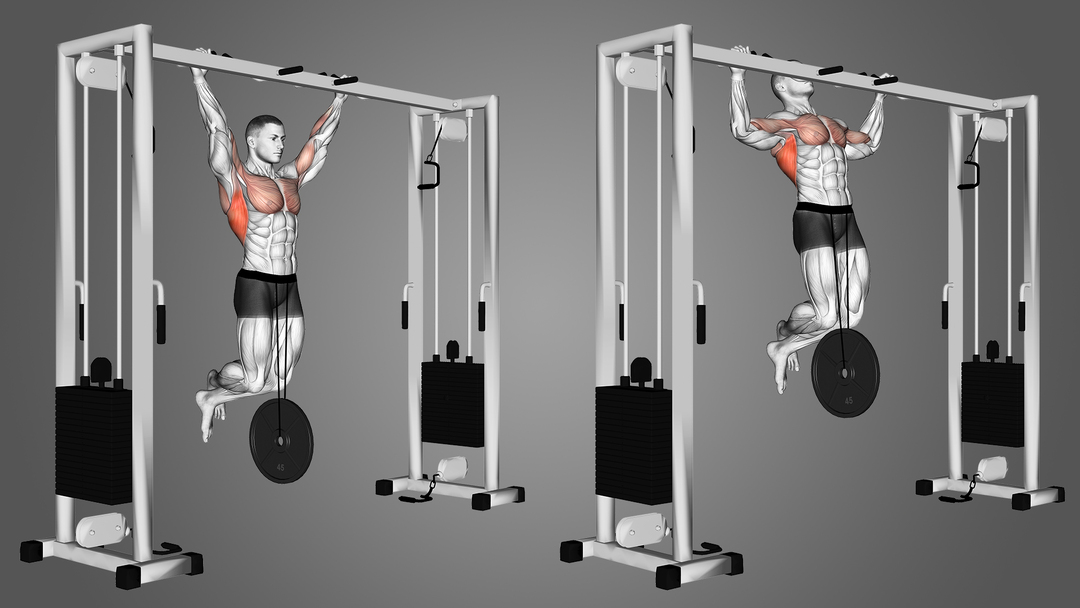
Weighted Pull-Up Standards offer clear benchmarks and progression tips. GetFit AI shows how to track load, reps, and technique for strength gains.
Fitness enthusiasts often track workouts while pondering how to distinguish a strong weighted pull-up from a heavy effort. Users logging exercises on Best Fitness Apps consider body weight, additional load, rep count, and proper form to accurately gauge performance. Realistic benchmarks, based on body mass and experience levels, provide clear targets and one-rep max equivalents. These standards offer practical guidance for setting achievable strength goals.
A systematic approach to tracking performance supports steady progress and balanced routines. Tailored training plans enable athletes to adjust volume and advance at a personalized pace. GetFit AI enhances progress measurement and refines technique with its AI fitness app, delivering tools that boost strength development.
Summary
- Weighted pull-up averages provide context, not absolutes, with Strength Level listing the average added load at 90 lb for males and 45 lb for females, so use those numbers as programming benchmarks rather than strict goals.
- Absolute results swing with body mass and leverage, and extremes are rare; for example, only about 10% of male lifters can perform a weighted pull-up with 135 lb, which highlights why individualized ramps matter.
- Periodize by goal: hypertrophy blocks should favor 6 to 10 reps, and, according to Calisteniapp, weighted pull-ups can produce roughly a 25% increase in muscle mass over 12 weeks.
- The grip and scapular systems are frequent rate limiters, and because weighted pull-ups show about a 50% increase in muscle activation relative to bodyweight, adding load often exposes specific failure modes that require accessory work.
- Set realistic milestones using percentiles, for example, RunRepeat reports 50% of people can do a weighted pull-up with 10% of their body weight, while only 20% can manage 25%, so relative load goals help scale expectations.
- Rely on objective signals and micro-progressions: treat maximal tests every 4 to 6 weeks, program two heavy sessions plus one light technique day weekly, and back off when concentric velocity drops more than 20% across a session.
- GetFit AI addresses this by turning weighted pull-up benchmarks and test metrics into individualized progressions that recommend micro-loading steps, technique cues, and session pacing based on tracked load, reps, tempo, and body mass.
What are the Average Weighted Pull-Up Standards?
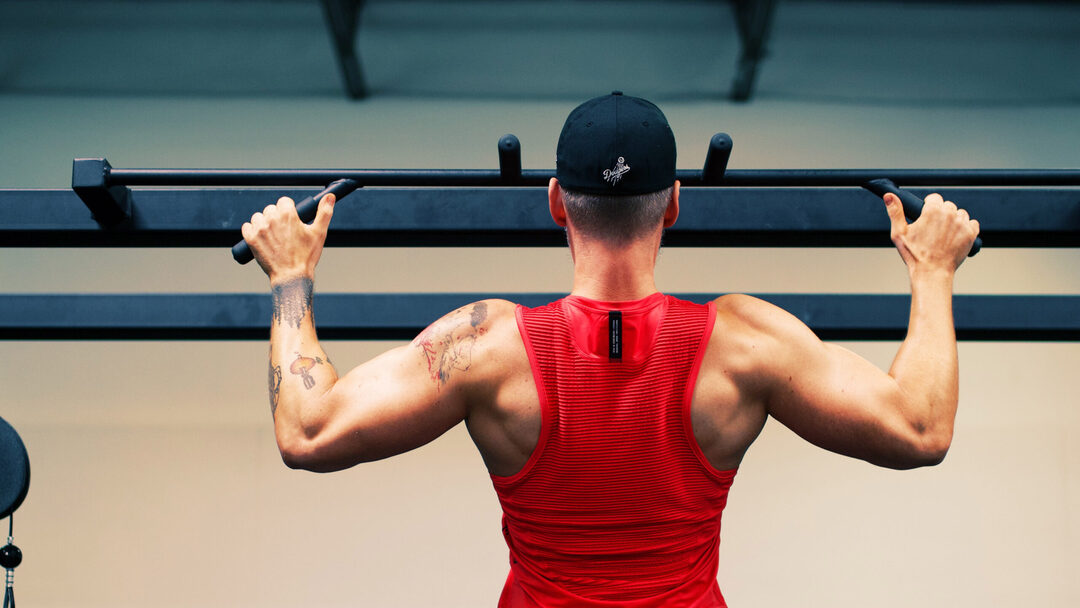
Weighted pull-up averages are a helpful way to measure your pulling strength, but they are not strict goals you have to reach. According to Strength Level, the average weighted pull-up for a male lifter is 90 lb, while the average for female lifters is 45 lb. This gives you a quick idea of what most trainees lift when they add weight. Use these numbers to help with your training plans, but remember, they don't tell the whole story. When working towards your goals, consider tracking your progress with an AI fitness app to optimize your training methods.
What does this average mean for your training?
The word 'average' combines many different results into a single number. It reflects what lifters can add based on strict, one-rep lifts, favoring those with clean technique and short training histories. The key point is clear: If your strict one-rep maximum (1RM) is close to the average, you're doing well. If you're below it, work on your technique and consistency. If you're above, focus on control, joint health, and maintaining good pulling strength instead of just trying to lift heavier weights.
Why do individual results differ so much?
Many factors, such as body weight, limb length, tendon leverage, and training experience, can affect the results. Lighter athletes usually show higher relative strength in pull-ups, while heavier lifters might lift more weight in rows or deadlifts but can have trouble moving their own body weight properly. This is common among both beginners and those returning to training. The issue is often not effort, but the gap between unassisted reps and lifting heavier too soon. Think of standards like a ladder: technique and consistent range of motion are the foundational steps you need to secure before moving on to heavier weights.
How do you translate averages into a progressive plan?
Use the average as a target and then figure out the steps needed to reach it. Start by increasing the volume of your workouts at lower intensities, adding specific eccentric exercises, and using short loading cycles that focus on single-rep strength and recovery. Swap heavy single reps for cluster sets or controlled negatives for a few weeks. These adjustments can improve your muscle coordination without overstraining your tendons. Also, make sure to work on grip and scapular control; these small changes can lead to quick improvements in your weighted pull-up performance.
What signals indicate you should add more load?
Increase the added weight when your strict singles feel easy for 3–5 reps over several sessions, when you can keep a full range of motion at slower tempos, and when accessory lifts like heavy rows and isometric dead-hangs are getting better. On the other hand, if you can't keep your chin over the bar on the last rep, you need to work on doing more quality reps with lower loads. The simplest rule that really works is to improve control before adding more mass.
What is the coaching metaphor for standards?
A quick coaching metaphor: If standards are the destination on a map, programming is the road. You can sprint straight towards a signpost and tire yourself out, or you can select the path that keeps your momentum going. This way lets you arrive stronger, healthier, and with skills that grow.
What counts as a valid weighted pull-up?
That number looks essential, but the real question is what really counts as a valid weighted pull-up. This is where things get interesting.
What are Weighted Pull-Ups?
Weighted pull-ups serve different programming purposes. They can be used to build hypertrophy, increase single-rep and near-max strength, or improve tension and control while lifting. It's crucial to decide on the purpose first, then choose the right reps, tempos, and recovery time to match that goal. For those looking to enhance their performance in these exercises, our AI fitness app can help you tailor a training regimen that aligns with your specific goals.
How should someone plan their weighted pull-ups?
For hypertrophy phases, it's helpful to focus on higher time under tension with sets in the 6-10 rep range. This should include slightly slower lowering movements and weekly increases in weight or volume. This approach is linked to noticeable size gains, as shown by research from Calisteniapp.com, which indicates that weighted pull-ups can lead to a 25% increase in muscle mass over 12 weeks. This shows why organized accumulation phases work well. Next, move into a 3 to 6-week intensification phase using 3 to 5 reps and more extended rest periods when aiming for maximal force output. After that, use short peaking cycles with clusters or heavy singles to check a new one-rep max (1RM).
What mistakes actually stall progress?
This pattern appears in workouts focused on building muscle: trainers include weighted pull-ups, but they allow momentum to sneak into every set, which can stall progress or cause elbows to flare. Two common problems are adding weight before the range of motion is steady and using too many quick reps, which turn the exercise into jerks rather than solid strength work. Solutions that usually work include a careful 2 to 4 second lowering phase, planned weeks of eccentric overload, and swapping one heavy set each session with paused reps at the top to strengthen scapular control.
When should you try advanced loading methods?
Suppose you notice that your weekly progress in added weight stops for four straight sessions, even when you keep your technique clean. In that case, it’s time to switch to intensity-preserving structures like cluster sets, heavy eccentrics, or double-rep protocols. Instead of adding more plates, think about doing five singles with 20 to 30 seconds of rest between sets for three to five clusters. This method allows for high-skill, near-max practice without too much overall volume. Also, it's essential to understand that only a minimal number of lifters can reach extreme absolute loads. According to Strength Level, only 10% of male lifters can do a weighted pull-up with 135 lb. This shows the need for personalized ramps rather than a one-size-fits-all approach.
How do you protect joints and resolve plateaus?
To protect your joints and fix plateaus, treat the grip and scapular systems as essential parts. If your grip fails before you finish a pull, add exercises like farmer carries, thick-handle work, and long dead-hangs. If your shoulders round and lose range when under load, you need to add banded face pulls, prone Y raises, and short-range isometrics. When tendons don’t respond well, it’s essential to lower the training frequency, switch to slow eccentric movements, and slowly increase volume with submaximal sets. Think of this system as a tuned engine: you can add horsepower, but if the mounts and bearings are weak, the extra power will only break parts.
How to handle progression effectively?
Most lifters manage their progress by guessing how much to add to their weights. This method feels familiar and straightforward. While it can work for a while, it has some common problems: repeated small technique failures, tendon flare-ups, and months of stalled numbers. Platforms like GetFit AI offer athlete-inspired progression templates, coaching cues when needed, and data-driven load ramps. These recommend exact weight increases and technique tips. This helps users get better faster while reducing the guesswork that often causes setbacks.
What is a practical way to check weighted pull-ups?
A final practical check involves scheduling two focused heavy sessions and one light technique day each week. It is essential to track tempo and range consistently. Treat any sudden increase in pain as a sign to deload and reset, rather than pushing for more plates.
What deeper gaps do weighted pull-ups reveal?
This common-sense approach holds until one realizes how a weighted pull-up can reveal deeper gaps in strength and movement.
Related Reading
- How Many Pull Ups Should I Be Able To Do
- Average Bench Press By Age
- Average Grip Strength Male
- Average Bench Press
- How Much Does A Bench Press Bar Weigh
- Average Male Bench Press
- How Much Can The Average Man Bench Press
- Grip Strength Chart
How Do Weighted Pull-Ups Test Your Fitness Level
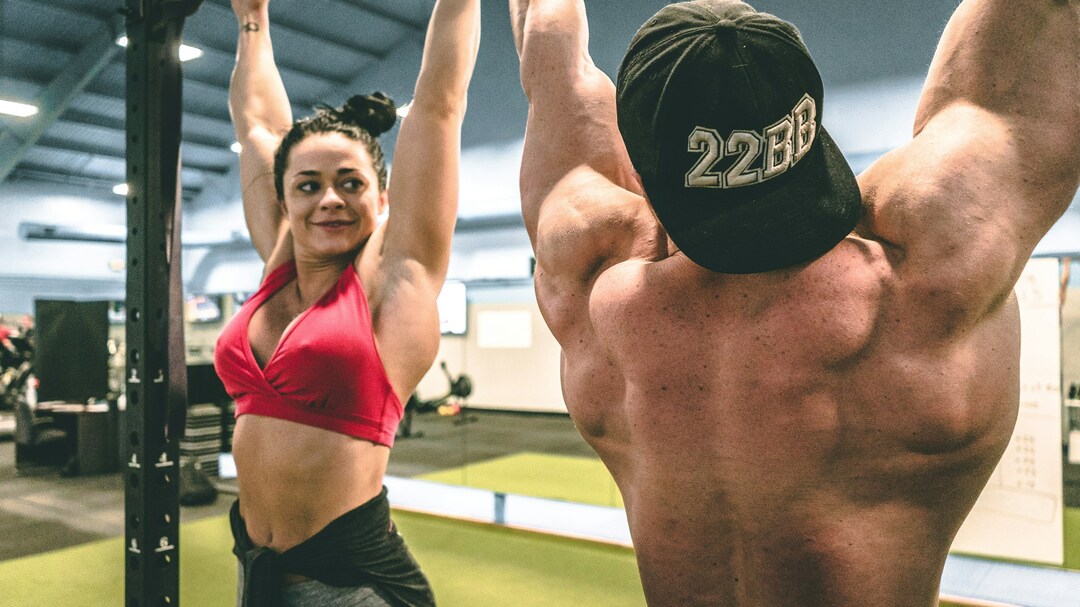
Weighted pull-ups are a test that assesses several factors: they measure your pulling strength, how well your hands and forearms work, and how well your torso resists twisting under weight, all at once. When done correctly, a weighted set shows if your body can create short bursts of force, hold tension for a while, or falls short when strength and endurance are needed.
What can a loaded rep tell you about your back and pulling strength? Lifting added weight focuses on the latissimus, rhomboids, and traps in a way that regular bodyweight reps usually do not. This helps you see who can actually create vertical force compared to those who just move easily with lighter weights. The regular grip pull-up also works your biceps, brachialis, brachioradialis, and infraspinatus.
Adding weights in this way can significantly improve your upper body strength, size, and stamina. This is why heavier sets quickly reveal which lifters build real power in their posterior chain and which only appear strong with unweighted repetitions. “The normal grip pull up also engages your biceps, brachialis, brachioradialis, and the infraspinatus. Introducing weights in this form can drastically enhance your upper body strength, size, and endurance,” according to Garage Strength. You can think of it like pulling a trailer: a small engine runs fine by itself, but only a strong engine maintains speed when the weight and incline increase.
How does grip failure show you where to intervene?
When your hands get tired before your shoulders, you get a clear signal instead of just a guess. Grip failure is a common problem, and across groups, a consistent trend emerges: grip endurance often lags pulling strength, especially among athletes who do a lot of pulling but few direct grip exercises. This gap indicates exactly what extra work to add. Whether it’s long dead-hangs, thick-handle carries, or short timed hangs, fixing grip failure makes sure that your progress in heavier sets doesn’t stop because your hands give out.
What does the rep profile reveal about strength versus stamina?
A lifter who can do one heavy lift but struggles to complete sets of three shows high maximal force but weak endurance. On the other hand, someone who can manage 8–12 reps with lighter weights has good stamina but may lack power in single lifts. Coaches often use a simple guideline for quick assessments. They note that, as mentioned by Garage Strength, “A strong and athletic upper body means jumping onto a pull-up bar at a local park and banging out an easy set of 10-15 reps.” This rep range clearly shows the difference between general conditioning and specific strength needs. It's essential to keep an eye on tempo and how performance drops from early to late reps; the shape of fatigue can help decide whether to focus on density, peak force, or technical control.
What are the predictable costs of adding weight?
Most lifters add plates because it feels straightforward. However, this familiar way can hide several predictable costs. Depending only on what feels right can create blind spots during progression. For example, grip problems, scapular rounding during heavy lifting, and tendon soreness may not appear until weeks later. These issues can make you train less often and slow down your overall progress. The AI fitness app puts all the testing data in one place. It recommends exact weight increments and technique tips. It also turns elite athlete methods into personalized plans. This way, users can increase their load without taking on the small mistakes that can lead to setbacks.
How do asymmetries and technical leaks appear in a weighted test?
Asymmetries and technical leaks can significantly affect performance in a weighted test. When underweight, slight imbalances become more noticeable: one elbow flicks out, the chin tilts to one side, or the torso rotates. These are not just cosmetic problems; they are predictable mechanical failures. They show why some athletes reach a performance limit even with extensive practice. A helpful method is to film one heavy set from the front and side for a week. By looking at ascent angles and bar tilt, athletes can work on their weaker side with targeted unilateral pulls and scapular stability holds until their symmetry improves.
What should you record and act on after a test?
What should you record and act on after a test? Record the added load, rep count, tempo, and the last-rep failure mode. Treat these entries as diagnostic data, not ego points. If your last rep fails on the descent, your eccentric capacity needs work. If the bar slips, your grip is the limiter. If ascent speed falls but range remains, the issue lies with neuromuscular drive. This measurable approach satisfies the instinct most athletes have to track progress, providing clear, prioritized next steps. Consequently, training becomes less about guesswork and more about engineering.
How does this test expose weaknesses?
This exposure reveals more than just weaknesses; it compels a decision about what to address next. This choice can significantly impact what happens next.
Where can you get more training guidance?
Ready to train like the legends and finally achieve the body you've always wanted? GetFit AI's AI fitness trainer app lets you follow the same workout routines that made Arnold Schwarzenegger, Kobe Bryant, Cristiano Ronaldo, Serena Williams, and over 11 other top athletes into champions. You can talk to them whenever you need help or motivation. Download the #1 rated AI fitness app for free today to get fit for less than the cost of a single month's gym membership.
Related Reading
- Bench Press Standards
- Do Pull Ups Work the Chest
- Symmetric Strength
- Grip Strength Norms
- Average Deadlift Weight
- 1 Rep Max Chart
- Average Male Deadlift
- Good Bench Press Weight
- Weightlifting Standards
Different Ways to Perform Weighted Pull-Ups
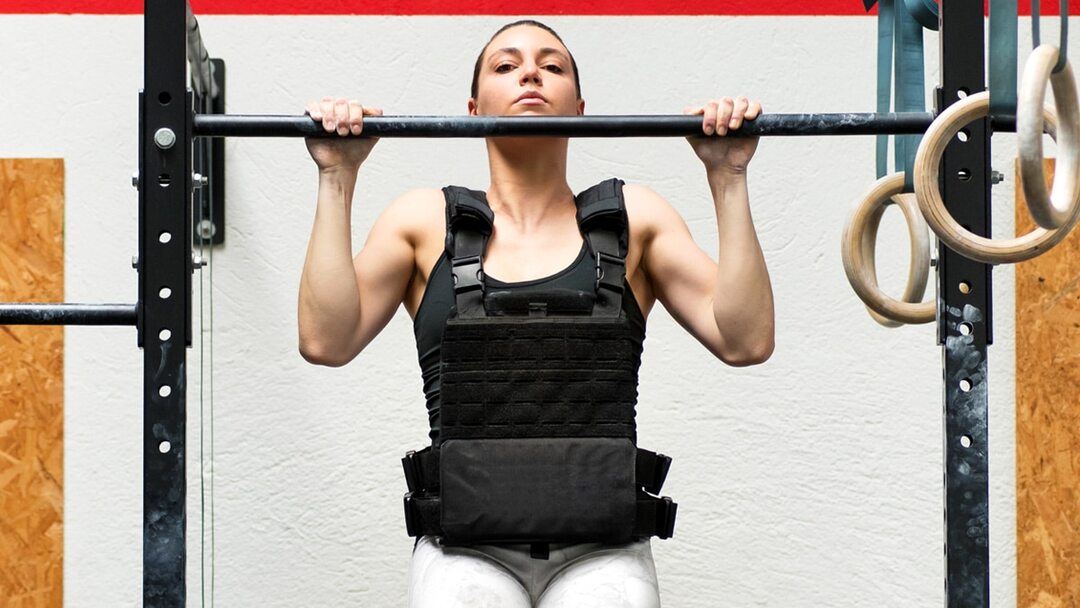
Each variation changes where the bar shows your weakness, so pick the method that targets the limiter you want to improve and the equipment you have available. The grip choice alters muscle focus and joint stress, while the way you add weight affects stability and the specific points in the range where tension is highest. To further enhance your training, consider how our AI fitness app can help you adjust your regimen effectively.
What are neutral grip weighted pull-ups?
Neutral Grip Weighted Pull-Ups offer a unique approach to strength training. Using parallel-hand positions on special bars or monkey bars reduces shoulder stress and spreads effort evenly across the lats, arms, and forearms. This setup also uses the biceps, like chin-ups, while maintaining strong back involvement. It is excellent for people moving from basic exercises or managing joint pain. Adding weight to these pull-ups safely boosts overall pull strength.
What are close-grip weighted pull-ups?
Close-Grip Weighted Pull-Ups offer a unique challenge. Hands closer than shoulder width work the lower lats, biceps, and grip muscles more. This often makes the exercise feel tougher because of the shorter lever length. Trainers notice that athletes usually switch to an underhand grip to promote arm growth and reduce early fatigue. Adding weights makes this exercise harder, helping develop the lower back more.
How do underhand grip weighted pull-ups work?
Underhand Grip Weighted Pull-Ups. With palms facing you in a chin-up style, these exercises focus on your biceps as well as your back. This makes it easier for beginners while still giving your arms a good workout. This grip helps you do more reps than an overhand grip, but it still builds strong pulling power. Adding weight helps increase the size of your biceps and your upper-body strength.
How do you add weight with belts?
Adding Weight with Belts. Dip belts go around your waist and connect plates with a chain. This keeps the weight balanced and helps you maintain good form during heavy sets. Start with lighter weights to learn how to control them, and then gradually increase the weight for stronger pulls. This method is excellent for lifting more weight without losing your form.
What is the dumbbell between feet method?
Dumbbell Between Feet Method. Clamping a dumbbell with your ankles is a way to do exercises without any special equipment. However, squeezing your legs can limit how much weight you can use and may cause a swing if your core is loose. Keeping your abs tight helps with stability, so this method works well for workouts at home or on the road. The primary focus is on making clean pulls, even though the grip can be tricky.
How does the chain draped over the shoulders technique work?
Chain Draped Over Shoulders. Less common chains rest across traps. This creates the most tension at the peak contraction when your power is at its highest. A secure fit helps avoid pinching your neck. Make sure to keep your gaze neutral to protect your posture. This type of variable resistance helps improve your top-end strength uniquely.
What is resistance band assistance reversed?
Resistance Band Assistance Reversed. When you anchor bands low and loop them high, they provide a pull that gets stronger as you push through. This is hardest right at the top, helping you finish strong during high-rep sets. It's great for adding extra weight without plates and acts like different strength curves. This method also works well if you're trying to fight fatigue.
How can gymnastics rings enhance instability?
Gymnastics Rings for Instability. Rings swing freely, making the shoulder, core, and arm stabilizers work harder compared to fixed bars. They also allow for grip flips during a set. Natural arm paths reduce joint wear and improve overall pulling strength. Using weights on the rings helps build elite control.
What are monkey bars for neutral pulls?
Monkey Bars for Neutral Pulls. Playground-style bars make it easy to use neutral grips. This helps balance the work your back and arms do. Changing your grip from set to set helps with even development. Adding weight can help you build strong back muscles.
How do towel hangs increase grip intensity?
Towel Hangs for Grip Intensity. When you hang draped towels, you need strong forearms to handle the extra weight, and it also works your core muscles. More experienced users will get great benefits in grip and stability. This is a significant next step after you have mastered bodyweight exercises.
Why add weight to begin with?
Weighted reps make muscles work harder and change the failure pattern, not just the number of reps done. A 2024 report by Garage Gym Reviews found a 50% increase in muscle activation when using weighted pull-ups instead of bodyweight pull-ups. This shows that adding weight recruits more lat and arm fibers with each rep, rather than just increasing the number of reps. Practical programming evidence shows that targeted loading is effective. For example, training with 20% of body weight for six weeks led to significant gains in reps in a short time, as noted by Straight Talking Fitness. So, the choice of loading is a strong tool for measurable improvement when used correctly.
How does grip choice change what you actually train?
A neutral grip, with palms facing each other, spreads the work across lats, biceps, and forearms. It usually reduces shoulder impingement, making it a wise choice for lifters who are recovering or building a foundation. In contrast, underhand grips focus more on the biceps, making weighted sets feel easier for those who want to shape their arms while still working the back effectively. Close grips create shorter levers, which increase the demand on lower lats, biceps, and grip strength. That is why close grips often feel much harder and why many trainees feel grip or elbow fatigue long before their backs give out.
Which loading methods work well in a crowded gym or a hotel room?
Dip belts focus the weight at the hips, keeping the load steady and allowing for a clean lift during heavy singles. Putting a dumbbell between your feet is a low-gear travel option, but it has clear downsides: it limits how much weight you can use and can cause swinging unless your core is tight and your hips are locked. So, this method is best for light-to-moderate training only. Draping a chain across the traps adds more tension at the top of the lift, effectively training peak contraction. At the same time, looped resistance bands used for reverse assistance can change strength curves, making them suitable for high-rep workouts. Using rings adds instability, recruiting stabilizer muscles and improving control; however, they require slower progressions because minor technical issues become more noticeable as the weight increases.
What usually goes wrong when people “just add weight”?
The familiar approach is to pick whatever is handiest, strap on a load, and blast sets because it feels productive. This method might work for a session or two; however, the hidden cost is technique collapse. Users may experience increased swinging, reduced shoulder control, and tendon overload, which can ultimately lead to reduced training. Platforms like GetFit AI provide athlete-inspired progressions and on-demand coaching. They recommend precise weight increments, different loading methods, and video or cue-based corrections, allowing users to lift heavier while maintaining proper form.
What technical cues prevent common failures?
If the hips swing, shorten the lever by tucking the knees slightly and squeezing the feet together to reduce the pendulum effect. Use a slower two-second descent to keep tension, followed by a short one-second hold at the top to reinforce scapular control. When using a dip belt, position the chain so the plate is centered under the hips, not hanging off to one side. Film the first heavy set from the side to check the bar path. If your grip fails first, switch to neutral or towel variations for a block and include direct forearm work like timed hangs or thick-handle carries.
How do you choose which variation to practice this week?
If your limiter is grip, focus on towel or neutral holds combined with low-rep, weighted sets with longer rests. If your shoulders hurt during pronated pulls, try using neutral grips and chains to concentrate on the top range. When you have less space, use a dumbbell clamp only for volume days, and save dip-belt work for quality heavy sets at the gym. Think of each method as picking the right tool for a specific task, not looking for a single correct answer.
What is the next piece?
While that feels decisive, the next piece will show why the payoff of the right choice is more important than focusing solely on bigger numbers.
Benefits of the Weighted Pull-Up
Weighted pull-ups are more than just an advanced rep; they are a precise tool for assessing fatigue, identifying mechanical issues, and setting achievable goals that build both strength and habits. Using them as a repeatable test changes the exercise from guesswork to valuable data that can be improved each week.
How can one use weighted pull-ups as a helpful diagnostic?
Start every heavy test with a steady warm-up, maintain the same pace, and use a single camera angle. Record four significant numbers: added load, bodyweight, rep count, and the exact way you fail. Testing should be done carefully rather than too often; it is smart to treat a maximum weighted attempt as a check every 4 to 6 weeks, with lighter technique sessions in between. If your last rep fails because your grip slips, the answer is to work on your grip. Suppose it fails because your chin drops. Focus on improving your neuromuscular drive and top-end strength. These are clear, actionable steps, not vague advice.
What realistic standards should shape expectations? Use population percentiles to set sensible intermediate goals, avoiding feelings of shame. For example, according to RunRepeat, 50% of individuals can perform at least one weighted pull-up with 10% of their body weight. This shows that a modest added load is possible for half of the population, making it a good early goal. In contrast, RunRepeat, only 20% of people can perform a weighted pull-up with 25% of their body weight. This indicates that heavier loads are in the upper level and need careful, steady progression.
When does adding weight stop helping and start hurting?
Watch for three failure signals that are more important than pain alone: a constant drop in unloaded reps over two weeks, a steady rise in session RPE for the same load, and a noticeable reduction in concentric bar speed across sets. If the average concentric velocity drops by more than 20 percent during a session, you are training into neuromuscular fatigue, rather than building clean strength. The correct response is at the program level, not a heroic effort: reduce intensity, add a deload session focusing on eccentrics or tempo, and gradually rebuild volume with slower increments that maintain technical integrity.
What is the hidden cost of a simple testing pattern?
Most lifters follow the same testing pattern because it feels simple and works for a while. The hidden cost of this simplicity is the missed micro-signals that can lead to tendon flare or lost frequency. Platforms like GetFit AI collect your test data and flag trends such as declining bar speed or repeated grip failure. They recommend specific micro-increments and recovery tweaks, turning sporadic testing into a continuous evidence loop. This process lets you keep training while reducing blind overload.
How does framing progress as micro-steps change behavior?
This pattern appears when athletes change from trying to achieve big jumps to focusing on repeatable wins. Micro-loading, by adding 2.5 to 5 percent, helps reduce fear and improve consistency in their training sessions. This means instead of making a significant effort to lift the maximum weight every month, athletes can plan to add a small weight plate during every second or third heavy training session, while also having two lighter technique days. The emotional change is essential; athletes feel less scared and more motivated, which keeps them training often and speeds up their long-term progress.
How do you keep the data honest?
Film the top and side views for a single heavy set every month, then compare the angles of ascent, the bar path, and the swing of the hips. Treat each recording as diagnostic. If the torso rotates or the bar tilts, focus on short unilateral pulls and scapular stability for two weeks before adding weight. Think of the process as tuning a fine instrument; minor adjustments now help avoid noisy breakdowns later.
Related Reading
- Average Bench Press By Age 16
- Best Free Workout Apps
- Best Calisthenics Workout App
- Average Deadlift Weight For Male
- Average Deadlift Weight Kg
- Best Workout Apps
- Best Hiit Workout App
- Best Workout Tracker App
- Average Bench Press Kg By Age
- Best Gym Workout App
- How Many Pull-Ups Can the Average Person Do
- Pull-Up Strength Standards
- Weighted Dips Strength Standards
- Grip Strength Standards
- Average Dumbbell Shoulder Press
- Average Incline Dumbbell Press
Make Your Favorite Athlete Your Fitness Trainer | Try GetFit AI's AI Trainer App for Free Today
Most people use familiar programs that fit everyone because they seem efficient. But this approach can make specific exercises, like weighted pull-ups, feel unclear. Minor problems, such as technique leaks, grip failures, and guessing during training, can accumulate and slow progress over time. Platforms like GetFit AI change elite athlete routines into personalized pull-up plans. They use micro-loading, specific technique tips, and on-demand chat coaching. This helps users close the gap between a standard and a realistic plan, keep their joints safe, and track steady improvements without guessing. The best way to enhance your fitness journey is with an AI fitness app.
.png)