

How Many Pull-Ups Can The Average Person Do?

.png)
Curious about fitness levels? Discover how many pull-ups can the average person do and see how your numbers actually stack up.
You open one of the Best Fitness Apps and see a pull-up challenge, then wonder how many pull-ups the average person can actually do and where you stand.
This guide breaks down pull-up standards by age, sex, and fitness level and shows typical reps for beginners, intermediate lifters, and advanced athletes so you know what to expect. Want a clear, realistic goal for your upper body strength, grip, and calisthenics progress?
GetFit AI, an AI fitness app, helps you set those targets, track reps and progress, and move from assisted chin-ups to full pull-ups with simple personalised steps.
Summary
- Pull-ups are a trainable skill and a reliable benchmark, with focused pull-up work shown to increase upper-body strength by about 20% over an eight-week block.
- Population averages mask wide variation: recreational samples report the average male can do about 8 pull-ups and the average female about 1 to 2, so most people fall well below athletic cohorts.
- Individual mechanics matter a lot, since longer limbs increase shoulder torque, and sport-trained samples illustrate the gap, for example, a 2025 cohort of collegiate swimmers and throwers included 36 athletes who could do at least ten consecutive pull-ups.
- Progression and testing should be methodical, for instance, increasing weekly pull volume by no more than 10% and repeating the same test protocol every 4 to 6 weeks to keep trends meaningful.
- Small, targeted changes move the needle efficiently, with a 5% drop in body fat linked to roughly a 20% increase in pull-up repetitions and a 10% increase in grip strength, potentially improving pull-up performance by up to 15%.
- Tendon and neuromuscular adaptations require time but reduce injury and improve repeatability, with tendon-focused loading recommended over 8 to 12 weeks, neuromuscular gains visible in 3 to 6 weeks, and consistent pull-up training associated with about a 30% lower risk of shoulder injury.
- GetFit AI's AI fitness app addresses this by translating proven templates into personalized progressions, auto-adjusting assistance, rep targets, and recovery windows based on individual readiness.
What are Pull-Ups?

Pull-ups are both a performance metric and a trainable skill, not an inscrutable talent. With consistent, progressive practice, you can convert them into predictable strength gains and clearer benchmarks for tracking progress.
What exactly do pull-ups build?
They load the lats, biceps, traps, posterior deltoids, and the small scapular stabilizers that keep your shoulder blades working together, while the core resists rotation. That means pull-ups improve force production and motor control across joints, so gains transfer to climbing, rowing, and other pulling tasks.
Why treat pull-ups as a benchmark?
According to the Institute of Nutrition and Fitness Sciences, "Pull-up performance is considered a robust marker of relative upper body strength." A single exercise gives coaches a compact way to compare strength relative to bodyweight, which helps set age- and weight-adjusted expectations in training plans.
How much improvement should you expect from focused work?
Pull-ups can increase upper-body strength by 20% over 8 weeks. RunRepeat 2023 frames this as evidence that short, concentrated blocks of pull-up-specific work produce measurable changes in strength, so your programming should include clear phases and repeated testing rather than guessing.
How do you progress if you cannot do a full pull-up yet?
Start with controlled negatives, band-assisted reps, and horizontal row variations, then add volume slowly so fatigue does not erode technique. A helpful rule is to increase weekly pull volume by no more than 10 percent; that rate keeps gains steady while lowering injury risk. When life interferes, a typical pattern emerges: training frequency collapses first, not intensity. Holding a tiny habit, like one short set of eccentrics three times a week for four weeks, preserves neural adaptations and makes restarting far easier.
Most people handle programming by copying sets and reps that worked for others, because it feels familiar and straightforward. That approach scales poorly: once you add job stress, family demands, or travel, rigid plans break and progress stalls. Solutions like personalized AI training platforms provide adaptive progressions, auto-adjusting load, rep targets, and recovery recommendations so programming stays realistic for the individual while still mirroring pro-athlete structures.
Think of pull-up progress like learning to ride a bike on a steep hill: you do a series of small, controlled attempts, adjust your line, and those little gains stack into confidence and capacity over weeks.
That surface-level progress looks good, but the next question about average ability reveals a deeper, surprising pattern.
Related Reading
- How Many Pull Ups Should I Be Able To Do
- Average Bench Press By Age
- Average Grip Strength Male
- Average Bench Press
- How Much Does A Bench Press Bar Weigh
- Average Male Bench Press
- How Much Can The Average Man Bench Press
- Grip Strength Chart
How Many Pull-Ups Can The Average Person Do?

Most people fall well below the benchmarks that trained gym-goers hit, and that gap shows up clearly in population averages: The average male can do about 8 pull-ups. The average female can do about 1-2 pull-ups. Both figures come from Marathon Handbook, 2023, and they describe broad recreational samples rather than athletic cohorts, so use them as context, not destiny.
Why do those averages hide more than they reveal?
Those headline numbers compress a lot of variation. The sample mixes people who train bodyweight strength with those who do not, and testing methods vary, so a single average masks widespread differences. Body mass, lever length, and training history push results in opposite directions: two people with identical torso strength can look different because one carries extra bodyweight or has longer arms. Think of it like two engines, one pulling a heavier trailer; the work is the same, but the outcome looks worse on the heavier rig.
How should you interpret an individual result?
Treat the average as a checkpoint, not a verdict. When you test, use strict criteria, such as a full dead hang start, a chin clearing the bar, and a strict lockout at the bottom, so your numbers are comparable over time. If your first test produces a modest number, log the exact setup and rest periods; that reproducibility is the difference between valid data and noise. I prefer small, measurable increments for short cycles, because psychological momentum follows clear, repeatable wins.
What people usually do, and why it falters
Most lifters follow popular routines because they seem authoritative and require no personalization, and that familiarity is understandable. As volume, frequency, and recovery needs diverge between individuals, the familiar approach produces inconsistent progress and wasted months chasing someone else’s plan. Solutions like GetFit AI translate proven athlete templates into personalized progressions, automatically adjusting rep targets, assistance levels, and recovery windows. Hence, the plan aligns with your body, schedule, and actual responses rather than your best guess.
A pattern that matters emotionally
A typical pattern appears across beginners juggling work and family: a single failed attempt saps confidence, training drops to sporadic sessions, and the metric stops moving. That emotional hit is concrete, so normalize short feedback loops and repeatable tests that rebuild confidence in measurable steps, not theatrical leaps. When I coach people, restoring a reliable practice over 6 to 12 weeks is usually the turning point more than any single program detail.
How to make a test worth its weight
Run pull-up tests like lab experiments. Pick one protocol, repeat it every 4 to 6 weeks, and record cadence, rest, and grip. Use assistance or negatives only within the same protocol so your trend line stays valid. An honest test does two things: it diagnoses where you are now, and it gives a clear, objective place to start the next training block.
That seems like the end of the story, but the more complex questions are just ahead.
Key Factors That Affect Pull-Up Performance
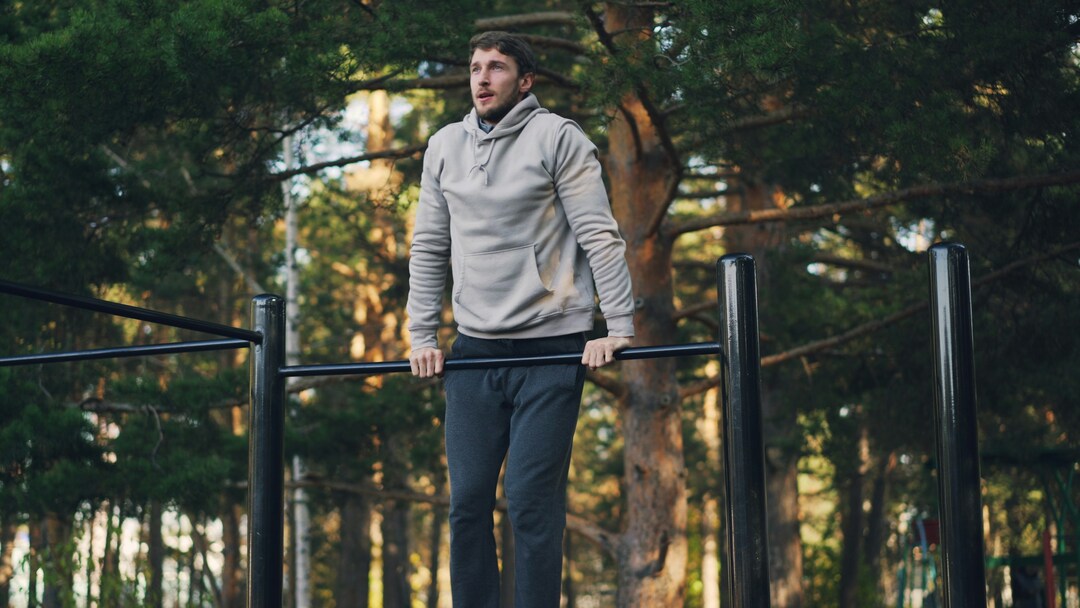
Seven practical factors determine pull-up performance. Mastering these levers is where raw strength converts into repeatable reps.
Body Weight and Composition
Body weight significantly impacts pull-up ability. A heavier body weight generally makes pull-ups more difficult because the muscles have to lift more weight. However, the composition of that weight matters: excess fat adds non-functional mass, making pull-ups harder, whereas higher lean muscle mass supports better performance. Athletes with lower body fat percentages tend to perform more pull-ups as they have a better strength-to-weight ratio, which is critical for this bodyweight exercise.
Muscle Strength and Strength-to-Weight Ratio
Pull-ups demand significant upper-body strength relative to the individual's body weight. Increasing max strength, especially in the back, arms, and shoulders, improves pull-up capacity. Enhancing muscle density and neural adaptations allows for lifting body weight with less effort, raising the number of pull-ups one can do. Key muscles include the latissimus dorsi, biceps, and scapular stabilizers.
Training Experience and Specificity
Consistent, focused pull-up practice is essential for improvement. Even general upper-body strength training or related exercises, such as lat pulldowns, do not necessarily translate into improved pull-up performance. Regular pull-up training improves neuromuscular coordination, endurance, and technique specific to the movement, resulting in higher reps and better form over time.
Sex Differences
Men typically outperform women in pull-ups due to differences in muscle mass distribution and body composition. Men usually have more upper-body muscle and less relative body fat, which favors pull-up performance. Women, on average, carry more fat relative to muscle, making bodyweight exercises like pull-ups more challenging.
Grip Strength
Grip strength is a limiting factor for many performing pull-ups. Even if the upper-body muscles are strong enough, a weak grip can prevent completing more repetitions. Training grip endurance and strength by hanging from the bar or using specific grip exercises helps overcome this challenge.
Technique and Body Coordination
Proper pull-up technique significantly affects performance. For example, optimal grip width, shoulder blade engagement, and body positioning can reduce unnecessary energy leaks and make the movement more efficient. Body coordination, including controlled leg and trunk positioning, can enhance power output and endurance during multiple reps.
Patience and Progression
Building pull-up strength takes time and consistent effort. It's essential to be patient and gradually increase the training load. Tendons, ligaments, and muscles need time to adapt to the stresses of pull-ups, and progress may be slow initially but accelerates with persistence.
How do limb length and leverage change the math?
Longer arms increase the distance your shoulder travels and the torque at the shoulder, so two people with identical back strength can produce very different rep counts. Think of it as a longer wrench requiring more force to turn the same bolt; you must either raise relative strength or reduce the effective load to compensate. In practice, that means athletes with long limbs benefit from heavier emphasis on max-strength work, controlled eccentric volume, and partial-range overloads to build the specific torque capacity their levers demand.
What part do tendons and elastic recoil play?
Tendons store and return elastic energy, and when you use them efficiently, you reduce metabolic cost per rep. A 2025 study showed shorter Time to Vmax in the countermovement pull-up, with a p-value < 0.01 and a correlation of r = 0.762, which explains why a well-timed downward-to-upward transition can produce faster, more powerful pull-ups in trained athletes (2025, study on countermovement mechanics). Training implications are concrete, not mystical: small, controlled rebound drills, progressive plyometric pulls, and tempo work that teaches the timing of the stretch-shortening cycle let you exploit elastic return, while strict slow eccentrics develop tendon resilience for safe transfer.
Why do grip, bar, and hand spacing shift results so much?
A thin, slightly curved bar invites a confident grip and efficient wrist position; a fat or cold bar leaks force through the hands and forearms, turning a shoulder test into a grip contest. Narrow vs. wide grips change lever arms and muscle emphasis, shifting the load from the lats to the biceps or upper traps. Treat bar and grip selection as training variables: rotate widths, practice fat-grip holds, and use chalk or pull straps strategically so your limiting factor becomes upper-body pulling power, not a slipping hand.
How significant is natural variation between people, and what does that mean for your plan?
Athletic samples behave differently from recreational ones; for example, a 2025 cohort of collegiate swimmers and throwers included 36 athletes who could do at least ten consecutive pull-ups, a reminder that sport-trained bodies cluster at higher performance levels (2025 study on trained athletes). That gap matters because it changes which training strategies scale: beginners improve fastest by reducing effective load and building baseline strength, while trained athletes profit more from velocity, eccentric overload, and fine-tuned recovery windows. Treat your starting point as a constraint that dictates whether you prioritize volume, strength, or speed.
What role do neuromuscular timing and peak velocity play across sets?
Repeatable set completion depends on how quickly you can re-create peak force within the fatigue window. Velocity is not showy math; it is a fidelity measure: if your first rep is fast and your tenth is slow, the nervous system failed to reproduce the timing and coordination you trained. When we introduced short velocity feedback blocks over 6 to 8 week phases, clients learned to hold technique under fatigue more consistently, because the targets forced clearer signals to the brain and removed guesswork from pacing.
Most people manage pull-up training by adding sets until they hit failure because that feels straightforward and requires no new tools. That approach works for a while but creates uneven adaptations, hidden tendon stress, and inconsistent progress as fatigue accumulates and form frays. Platforms like AI fitness app bridge that gap by personalizing assistance levels, prescribing velocity and eccentric targets, and adjusting recovery windows automatically so volume and intensity scale with your actual response rather than a one-size plan.
Ready to train like the legends and finally achieve the body you've always wanted? GetFit AI's AI fitness app lets you follow the exact workout routines that made Arnold Schwarzenegger, Kobe Bryant, Cristiano Ronaldo, Serena Williams, and 11+ other elite athletes into champions, and you can chat with them whenever you need guidance or motivation.
That solution sounds tidy, but the frustrating part is this: the single factor that kills progress is rarely raw strength, and that makes the next step unexpectedly important.
Related Reading
- Bench Press Standards
- Do Pull Ups Work the Chest
- Symmetric Strength
- Grip Strength Norms
- Average Deadlift Weight
- 1 Rep Max Chart
- Average Male Deadlift
- Good Bench Press Weight
- Weightlifting Standards
How to Improve Your Pull-Up Count
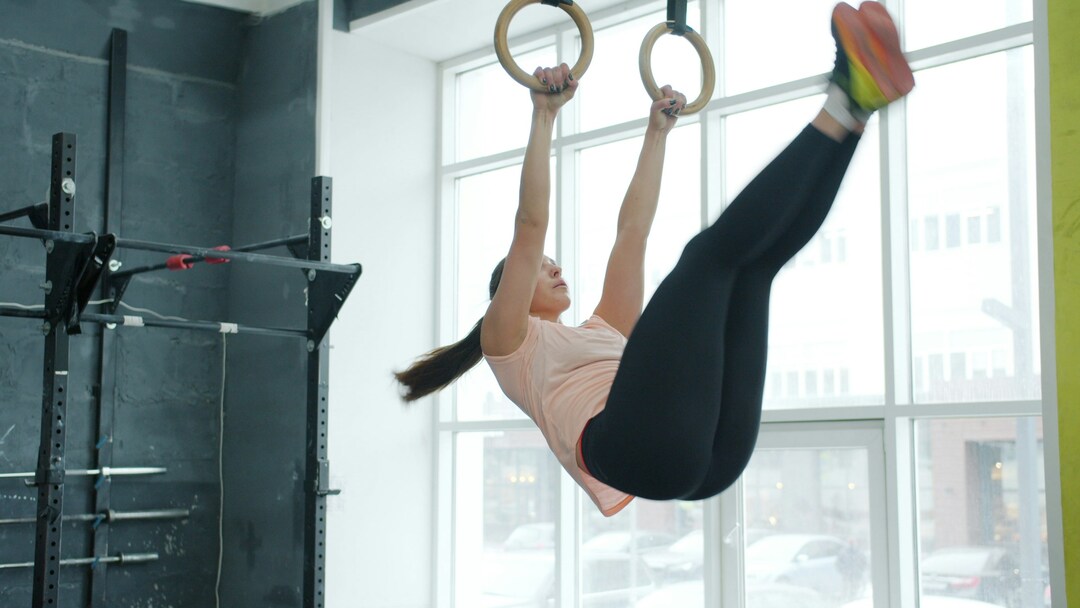
Improving your pull-up count comes down to programming precision, small changes to body composition, and targeted accessory work that converts existing strength into repeatable reps. Focus on planned training blocks, a few high-leverage set schemes, and recovery and nutrition choices that let you train more often without breaking down.
Strengthen the Main Muscles
Pull-ups primarily engage your latissimus dorsi (lats) and biceps. Strengthening these major muscles is essential, but attention must also be paid to smaller supporting muscles such as the lower and mid traps, shoulders, and core. Engaging these stabilizers enhances control and power throughout the movement, allowing for more reps with better form.
Incorporate alternative exercises
If pull-ups are difficult initially, use exercises that gradually build the relevant strength. Inverted rows mimic the pull-up motion at a more comfortable angle, helping build back and arm strength while allowing core engagement. Negative pull-ups, starting in the top position and slowly lowering, develop eccentric strength and control. Assisted pull-ups with resistance bands or machines reduce the load, letting you build strength with proper form.
Train Below Failure for Endurance
Avoid training to complete failure every set, as it can lead to burnout and hinder progress. Instead, perform multiple sets of 2 to 5 reps, staying about two reps shy of your maximum capabilities. Rest for 30 to 90 seconds between sets, aiming for a cumulative total of 20 or more reps per session to build muscular endurance and volume over time.
Use Progressive Overload and Weighted Pull-Ups
Once bodyweight pull-ups become manageable in moderate reps, progress by gradually increasing reps, decreasing assistance, or adding external weight via a belt or vest. Weighted pull-ups are an effective method to overcome plateaus and build strength, but should be introduced cautiously with adequate recovery periods.
Practice Consistency and Track Progress
Consistency is paramount. Training pull-ups three to four times per week while progressively increasing volume or intensity ensures steady improvement. Tracking reps, sets, and variations helps identify progress and plateaus so training can be adjusted accordingly.
Focus on Grip, Core, and Shoulder Stability
A firm grip improves your ability to hold onto the bar for more reps. Strengthening forearms and the smaller muscles around the shoulders enhances joint stability and reduces injury risk. Engaging your core and keeping your body tight during pull-ups prevents swinging and maximizes efficiency.
Use Proper Pull-Up Form
Start each pull-up by retracting and depressing your shoulder blades, engaging the lats rather than relying solely on your arms. Pull your body up until your chest or chin reaches the bar level, then lower yourself down with controlled movement. This technique recruits muscles properly and builds strength effectively.
Practice Frequency with Submaximal Sets ("Grease the Groove")
Performing multiple submaximal sets throughout the day (e.g., sets of few reps, well below failure, several times daily) trains the nervous system, improves technique, and increases strength without excessive fatigue. This approach is constructive early in training.
How should you sequence training blocks for steady gains?
Start with cyclical blocks that each target a narrow adaptation for 4 to 6 weeks: a hypertrophy phase that raises muscle cross-sectional area, a strength phase with low-rep heavy sets to increase maximal force, and a power phase that teaches faster concentric recruitment. Use tempo control during the hypertrophy block, then shift to short, near-max singles and doubles in the strength block to improve top-end speed. Finish each cycle with a lighter week to consolidate gains and preserve tendon health.
What set and rep tricks break plateaus?
Use cluster sets and short-rest density blocks to increase high-quality reps without fatiguing technique. For example, do 6 clusters of 3 reps with 20 seconds rest between clusters rather than one long AMRAP; that preserves velocity and forces more repeats at near-top effort. Add planned eccentric overload twice per week, for instance, 4 controlled 6- to 8-second negatives after a warm-up set, to build tendon tolerance and strength specific to lowering under load. Rotate in partial-range holds at sticking points, such as 5-second iso-holds just above your chest, to fix the precise joint angle that stalls your reps.
How should you manage body composition and recovery to convert strength into more reps?
Small changes in composition pay off disproportionately for bodyweight moves. A report that reducing body fat by 5% can lead to a 20% increase in pull-up repetitions, so even modest fat loss with preserved muscle will move the needle. Pair a modest caloric deficit with a protein target of roughly 1.6 to 2.2 grams per kilogram bodyweight, emphasize resistance training to protect muscle, and schedule weekly refeed meals so strength signals remain strong. For recovery, prioritize consistent sleep and two full recovery days every 7 to 10 days rather than an endless daily grind; that spacing keeps tendon adaptation moving forward while letting you sustain hard training blocks.
What specific accessory lifts and small wins matter most?
Targeted grip work and forearm endurance are efficient levers you can add without much time cost, because improving hand strength translates directly into more secure repetitions. According to Straight Talking Fitness, a 10% increase in grip strength can improve pull-up performance by up to 15%, so include two focused grip sessions per week, such as timed dead-hangs, towel hangs, and fat-grip carries. Complement that with one weekly shoulder health circuit, such as face pulls, banded external rotations, and thoracic mobility drills, done for tone and range rather than fatigue.
Most lifters pile on more sets and test to failure because that feels straightforward. That familiar approach works briefly, but as load and frequency climb, it fragments recovery, hides technique decay, and produces frustrating stalls. Solutions like GetFit AI personalize volume and recovery by auto-adjusting daily targets, prescribing cluster or eccentric blocks when needed, and tracking readiness. Hence, users hit the right stimulus without excessive tendon stress.
How should you measure progress so adjustments are surgical rather than guesswork?
Move beyond a single max-rep test by tracking three metrics: best rep quality at submax loads, total weekly rep volume at an RPE ceiling, and bar speed on the first rep. Capture bar speed simply with phone slow motion or a velocity app over a 4-week block; falling speed signals the need to deload or swap in power work. Re-test using the same setup every 4 weeks to ensure the change is meaningful, and log perceived exertion, sleep quality, and any joint soreness so program tweaks are data-driven, not emotional.
A short, practical routine to keep you training longer
When a client was stuck at four strict pull-ups for three months, we added two weekly cluster sessions, one targeted grip day, and a planned six-week body composition phase with conservative calorie reduction; after eight weeks, they doubled their reps while reporting less joint soreness. Use that model as a template: clear blocks, two small accessory sessions, and an evidence-backed nutrition plan that preserves strength.
That pattern feels decisive, but it raises one bigger, surprising question about what pull-ups actually do for the body.
Benefits of Pull-Ups for the Body
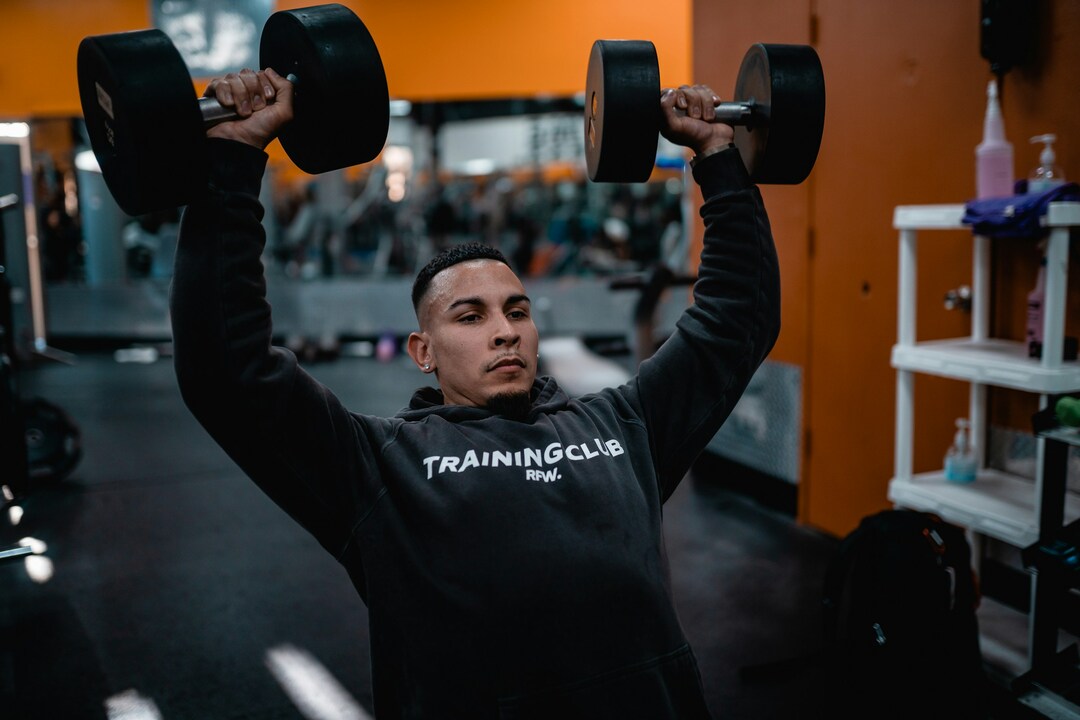
Pull-ups do more than build visible back and arm muscle; they strengthen the shoulder complex and the nervous system patterns that make overhead control reliable, while directly improving hand strength and functional resilience. Those changes show up in day-to-day tasks, sport-specific grips, and lower rates of shoulder problems when training is consistent and well-dosed.
Why do pull-ups actually protect shoulders?
The shoulder benefit is not just stronger lats; it is coordinated scapular control and balanced rotator cuff activation that distributes load across the joint. Over repeated, controlled reps, the small stabilizers learn to time their contractions with the big movers, which reduces focal stress on any one tendon or capsule. According to RunRepeat, that training pattern is associated with a 30% lower risk of shoulder injuries, demonstrating the practical payoff of prioritizing technique and progressive loading.
How does a stronger grip change performance outside the gym?
Grip is the gating factor in many pull-up sessions, and stronger hands let you channel upper-body force where it belongs, not into a slipping hold. RunRepeat reports that performing pull-ups regularly can improve grip strength by 15% in 6 weeks, which explains why athletes who add targeted hangs and varied bar work suddenly finish more sets without form collapse. When we reorganize a six-week microcycle to emphasize two short grip-focused sessions, the pattern is clear: mid-set failures drop and training quality rises, which restores confidence as much as capacity.
What nervous system changes are happening beneath the surface?
Pull-ups train rate coding and intermuscular coordination, meaning your brain gets better at recruiting the right motor units at the right time. That is why early progress often feels like improved "crispness" instead of raw size. You can accelerate this by adding short velocity-focused efforts and exacting isometric holds, which teach the nervous system to reproduce forceful, well-timed contractions under fatigue. Expect measurable neuromuscular gains within 3 to 6 weeks when you prioritize quality over endless volume.
Most people pile on reps and test to failure because it feels straightforward and familiar, and that approach is not wrong at first; it is just incomplete. Over months, the hidden cost appears as grip-limited sets, uneven tendon soreness, and stalled technique. Platforms like GetFit AI provide an alternative path; they personalize assistance, prescribe eccentric tempos and grip progressions, and adjust daily targets based on readiness so athletes get the right stimulus without unnecessary overload.
How do you fix side-to-side weakness that limits reps?
Address asymmetry with unilateral negatives and controlled holds at three angles, using a three to five second eccentric and a lighter assistance level on the weaker side. Run that block for four weeks and compare strict concentric counts and hold endurance, because symmetry usually changes faster than people expect when the weaker side receives precisely measured volume. This approach turns an invisible limitation into a surgical intervention, not more random sets.
What should older adults or injury-prone trainees focus on?
Shift to slow eccentrics twice weekly, aim for progressive tendon loading rather than chasing maximum reps, and start with assistance equal to roughly half bodyweight if needed for full range. Tendons adapt slowly, so plan 8 to 12 weeks of consistent, controlled loading and modest progression, while keeping one day per week low effort to preserve longevity. It is exhausting when pain forces you to stop, so maintaining consistent practice with conservative dosing is the real win.
Think of tendon remodeling like conditioning a leather strap; repeated slow tension reshapes it into something more challenging and more reliable, not something you can rush with volume alone.
The frustrating part? Translating elite routines into something that truly fits your body and life is the tricky piece most programs skip.
Related Reading
- Average Bench Press By Age 16
- Best Free Workout Apps
- Best Calisthenics Workout App
- Average Deadlift Weight For Male
- Average Deadlift Weight Kg
- Best Workout Apps
- Best Hiit Workout App
- Best Workout Tracker App
- Average Bench Press Kg By Age
- Best Gym Workout App
- Pull-Up Strength Standards
- Weighted Pull-Up Standards
- Weighted Dips Strength Standards
- Grip Strength Standards
- Average Dumbbell Shoulder Press
- Average Incline Dumbbell Press
Make Your Favorite Athlete Your Fitness Trainer | Try GetFit AI's AI Trainer App for Free Today
We often fall back on generic programs because they feel simple, and that familiar approach turns small pull-up wins into months of guesswork and stalled pull-up counts. Solutions like GetFit AI translate proven athlete templates into personalized progressions, on-demand coaching, and bodyweight-calibrated benchmarks, so your rep range and average pull-ups rise on a clear, measured path. You can try the app free to see how consistent progress actually feels.
.png)